The Short Answer
- 34 items cover everything a baby needs from birth through 12 months, organized into 6 categories.
- Sleep requires 5 items: a crib or bassinet, firm mattress, 3 fitted sheets, 4 swaddle blankets, and a monitor.
- Clothing runs 4 to 6 pieces per size, with fewer pieces as sizes go up.
- Feeding needs just 4 bottles in one style upfront; a high chair, breast pump, and milk storage bags fill out the 6-item list.
- Items like wipe warmers, bottle sterilizers, and baby food makers are skippable; the “orderable in two days” rule keeps late additions lean.
A minimalist baby registry covers birth through 12 months with exactly 34 items across six categories: sleep, diapering, feeding, clothing, bath, and transport. Everything cut from this list either has a workable substitute, sits unused by week six, or can wait until you know what your actual baby needs. Each item comes with an exact quantity, so you know how many to register for, not just which aisle to browse. What’s left has no duplicates and no backup gear for backup gear.
Minimalist Baby Registry: 34 Items by Category
Six categories account for all 34 items. The table below shows how many fall into each group and the quantity range within each, so you can see where the list is dense and where it stays lean on purpose.
| Category | Line items | Quantity notes |
|---|---|---|
| Sleep | 5 | 3 fitted sheets, 4 swaddle blankets |
| Diapering | 5 | Two sizes (NB + size 1), wipes in bulk |
| Feeding | 6 | 4 bottles, 8 burp cloths, 4 to 6 bibs |
| Clothing | 5 | 4 to 6 pieces per size, 6 sock pairs, 2 NB hats |
| Bath | 3 | 1 tub, 1 wash/shampoo, 6 washcloths |
| Health and transport | 7 | Car seat, stroller, carrier, 4 health tools |
| Total | 34 |
The list skews toward consumables, diapers, wipes, burp cloths, where running short causes a real problem at 2 a.m. Gear stays at one unit per item. Bath is just 3 line items because a newborn needs a tub, something to wash with, and something to dry with. Health and transport land at 7 because each item is genuinely distinct and nothing else does the job.
Sleep and Diapering: The Non-Negotiables
Sleep needs 5 items and diapering needs 5, for a total of 10 non-negotiables to have fully stocked before the baby comes home. The AAP safe sleep guidelines specify a firm, flat surface with no loose bedding, bumpers, or pillows, which is why the sleep list stays deliberately sparse. A crib or bassinet, one firm mattress, three fitted sheets, four swaddle blankets, and a baby monitor cover everything the first year demands.
Three fitted sheets is the practical minimum: one on the mattress, one in the wash, and one spare for when a middle-of-the-night blowout hits before laundry’s done. Four swaddle blankets follow the same logic, and they pull double duty as light covers, burp cloths, and tummy-time mats in the early weeks. The CPSC crib safety guidance is worth reading before you buy or accept a secondhand crib, since federal standards have changed over the years.
A changing pad on top of a dresser you already own replaces a dedicated changing table with no loss of function and no extra floor space. Stock both newborn and size 1 diapers before the baby comes home, but keep the newborn quantity modest since some babies arrive big enough to skip that size in the first week. Wipes, a barrier cream, and a diaper bag complete the five-item diapering group.
Tip: Keep a small basket of diaper supplies in a second room where you spend a lot of time. A folded blanket on the floor serves as a backup changing surface without adding any gear to the list.
Feeding Essentials for Any Plan
The feeding category covers six items and works whether you breastfeed, formula feed, or do both. Four bottles in one style is a reasonable starting point. Babies have opinions about nipple shape and flow, and a full set in a style your baby rejects is money that goes nowhere. CDC breastfeeding resources cover storage and handling of expressed milk if you plan to pump.
A breast pump is on the list. Under the Affordable Care Act, insurance plans are generally required to cover one at no out-of-pocket cost, so check your specific plan before registering for it. You may be able to order directly through a supplier your insurer designates. Milk storage bags pair with the pump and are worth listing even if your feeding plan isn’t fully settled before arrival.
Eight burp cloths and four to six bibs handle spit-up and drool through the full feeding rotation. The high chair is the one feeding item that can wait until after the baby arrives, typically around the four to six month mark when solid foods begin. Buying it then means you can see your kitchen layout and gauge your baby’s trunk control with actual information.
Tip: When registering for bottles, choose one style and note that in your registry comments. Receiving a variety of bottle shapes and flows as gifts typically means returning half of them after the baby shows a preference.
Clothing and Bath Basics: How Many Pieces Is Enough?
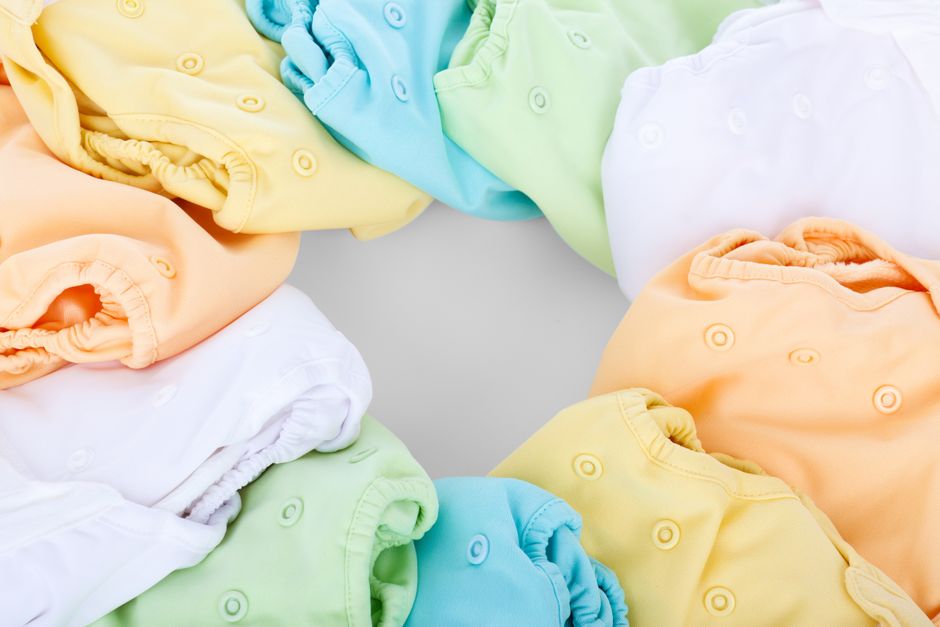
4 to 6 pieces per size is the practical guideline for baby clothing on a minimalist registry, enough to get through several days with laundry twice a week. Four size ranges: newborn onesies at 4 to 6, sleepers in 0 to 3 months at 5 to 6, sleepers in 3 to 6 months at 4 to 5, and outfits in 6 to 12 months at 4 to 5, plus six pairs of socks and two newborn hats. Baby shoes aren’t on the list since they serve no purpose before a baby is walking.
Quantities taper as sizes go up because you have more time to buy once the baby grows into them, and older babies tend to get more clothes as gifts. Footed sleepers do the real work in the first few months: they zip or snap quickly, which matters at 3 a.m. Outfits become more relevant around six months, when babies are out more often.
Bath totals three items: an infant bathtub with a sling or support insert for the newborn stage, a gentle wash and shampoo combo, and six soft washcloths. The AAP newborn bathing guidance notes that babies don’t need daily baths, which means this three-item setup covers the first year without any specialized gadgets or organizers. The washcloths double as gentle cloths for wiping face and hands between baths.
Health, Soothing, and Transport: 7 Items With No Substitute
Seven items make up the health and transport category, and nearly all of them have no workable substitute. A rectal thermometer gives the most accurate temperature reading for young infants, which matters when you’re on the phone with a pediatrician and they ask for a number. MedlinePlus newborn care covers infant hygiene and care basics and is a solid government-sourced reference for the early months.
A nasal aspirator, nail file and clipper set, and white noise machine fill out the health and soothing items. A dedicated white noise machine is more consistent than a phone app because it doesn’t cut out when a call comes in or the screen times out. In a small apartment, it also buffers household noise so it doesn’t break up naps.
For transport, the list includes one infant car seat, one stroller compatible with it, and one baby carrier or wrap. One of each, nothing more upfront. A second stroller or an extra carrier isn’t a first-year need for most families. The Mayo Clinic infant health overview covers general basics for the early months and is a useful reference beyond gear.
Tip: A carrier and a stroller are not interchangeable, but together they cover almost any scenario. The carrier handles stairs, crowds, and fussy stretches that a stroller cannot. Register for both if budget allows, and prioritize the car seat first.
What to Skip and What to Buy Later
Several popular baby products are genuinely optional and didn’t make this list. The baby walker is the one item actively not recommended by pediatric authorities. Everything else below shows up on nearly every mainstream registry and rarely justifies its price or floor space.
- Wipe warmer: Heated wipes are a comfort item, not a need. Standard wipes at room temperature work for the vast majority of babies, and the warmer is one more countertop appliance that needs cleaning and refilling.
- Dedicated diaper pail: A lidded trash can with daily bag changes handles diaper disposal in most homes. A diaper pail is a personal preference worth adding later if odor becomes an issue in your specific space.
- Bottle sterilizer: A clean dishwasher or a pot of boiling water sterilizes bottles without a device that takes up counter space. Skip this on the initial registry.
- Multiple baby monitors: One monitor chosen for your floor plan is enough. A full video system with breathing sensors is an add-on to evaluate after seeing your actual sleep setup.
- Infant lounger as a sleep surface: A lounger is not a compliant sleep surface. It’s also one of the fastest-outgrown baby products. If you want one for supervised awake time, buy it yourself after the baby arrives rather than registering for it upfront.
- Baby food maker: A standard blender or food processor handles every puree you will serve in the six to twelve month window. A dedicated baby food maker is a single-use appliance.
- Baby walker: Pediatric authorities advise against walkers because of fall and tipping risks, particularly near stairs. Skip this one entirely rather than adding it later.
- Baby shoes before walking: They fall off, serve no functional purpose, and use up registry space better spent on consumables.
- Crib bumpers, pillows, and positioners: These conflict directly with AAP safe sleep guidance and should not appear on any registry.
The rule that works across most of these categories: if you can order it on your phone and have it in two days, it doesn’t need to be on the registry before the baby arrives. A high chair, bouncer seat, activity gym, and most six-plus-month gear all qualify. Your real baby will tell you what she needs. A registry is for the things you genuinely cannot wait on.
Key Takeaways
- 34 items across 6 categories cover birth through 12 months without duplication or backup gear.
- Sleep needs exactly 3 fitted sheets and 4 swaddle blankets; the AAP recommends nothing else in the crib.
- 4 to 6 pieces per clothing size is a common practical guideline; skip shoes entirely until walking begins.
- Start with 4 bottles in one style; add more or a different style after the baby arrives and shows a preference.
- The bath category totals 3 items: tub, wash, and 6 washcloths.
- If an item is orderable within two days, it doesn’t need to be on the registry before birth.
The 34 items on this list are a floor, not a ceiling. Starting lean means you can learn what your baby needs before you’re surrounded by things they don’t. Most families add a few things in the first months, a second carrier style, an extra size of bottles, more burp cloths, but they add them from real experience rather than pre-birth guessing.
Sleep and diapering are the categories to have fully stocked before the baby comes home. Everything else has some flexibility. When the list feels short, go back to the two-day rule: most of what parents wish they’d registered for can be ordered from a phone while nursing at 3 a.m. That’s the system working.
Frequently Asked Questions
How many total items should be on a minimalist baby registry for the first year?
34 items covers the full first year across sleep, diapering, feeding, clothing, bath, and transport. Traditional registries often run well above that count. Trimming to 34 cuts category overlap and gear that goes unused after the first few weeks, without leaving any daily task uncovered.
If I am short on space, which big baby items can I skip and still cover the essentials?
A dedicated changing table can be replaced by a changing pad on a dresser you already own. A diaper pail can be skipped in favor of a lidded trash can with daily emptying. One sleep surface, a crib or bassinet but not both, is enough. A baby food maker is skippable since a standard blender handles the job.
How many clothes do I really need for a baby from birth to 12 months on a minimalist registry?
Across four size ranges, this list totals roughly 18 to 22 pieces, plus 6 sock pairs and 2 newborn hats. That supports laundry every three to four days without running short. Register for fewer newborn-size pieces than 0 to 3 month pieces, since many babies skip the newborn size in the first week or two.
Can I build a minimalist baby registry that works whether I breastfeed, formula feed, or do both?
Yes. The feeding section includes 4 bottles, a breast pump, milk storage bags, burp cloths, and bibs, which covers all three paths without separate lists. Check whether your insurance covers the pump at no cost before registering for one. Many plans do under the Affordable Care Act.
What are the first items I can safely delay buying until after the baby arrives to keep my registry lean?
A high chair isn’t needed until solids begin, around four to six months. Additional bottle styles can wait until you know your baby’s preference. Clothing in sizes 6 to 12 months, an activity gym, and any soothing tools beyond a white noise machine can all be added after arrival with no gap in daily coverage.
This article is for informational purposes only and does not replace professional medical advice. Always consult your pediatrician about your child’s health.