
The Short Answer
- Healthy newborns in a room-share setup typically don’t need a monitor right away. The key factor is distance, not the baby’s age.
- Buy one when the baby sleeps somewhere you can’t easily hear, such as a separate nursery or a room on a different floor.
- Audio monitors handle the job for most homes; choose video when your room layout or a caregiver’s comfort level justifies the added cost.
- Consumer monitors are convenience tools, not medical devices, and there’s no evidence they can prevent SIDS.
- Premature babies or babies with breathing problems need a clinician-prescribed device, not anything sold in a baby gear store.
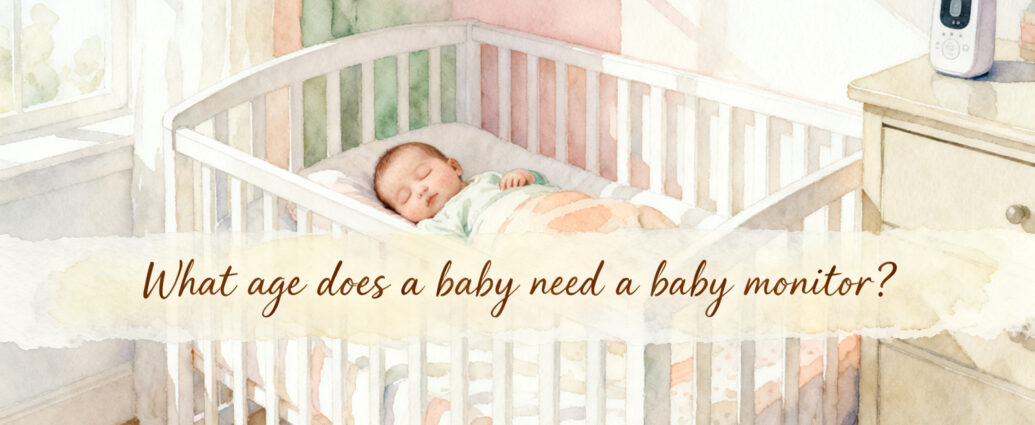
Most babies do not need a baby monitor at birth. The real buying trigger is distance: when your baby sleeps somewhere you can’t easily hear from, like a separate nursery or a room on a different floor, a monitor fills that gap. Registries treat monitors as standard newborn gear, but whether one belongs on yours has nothing to do with what week of pregnancy you’re in. This piece covers the age-based timeline through the first six months, plus later milestones, the home-layout factors that actually drive the buy-or-skip decision, what separates a consumer listening device from a clinically prescribed monitor, and when to buy versus wait.
Most Babies Do Not Need a Monitor at Birth
For most newborns, there’s no real distance to cover in the first weeks. The American Academy of Pediatrics recommends room-sharing with the baby, using a separate sleep surface like a bassinet or crib right next to the parents’ bed. When the crib is a few feet away, normal baby sounds, grunts, stirring, crying, carry fine without any device.
A consumer baby monitor is a listening or viewing device. A clinical apnea monitor is a prescription device a doctor orders for specific medical reasons. They’re not the same product, and buying one at a baby gear store doesn’t substitute for the other. The AAP states in its AAP apnea monitor guidance that most newborns don’t need a home apnea monitor, and that these devices haven’t been shown to reduce SIDS risk.
That said, some families have a real reason to add a monitor from day one. A large home where the bassinet isn’t in the same room as the parents, a basement or second-floor nursery, or a caregiver who sleeps very heavily all create a genuine hearing gap from birth. If any of that sounds like your setup, buying before the baby arrives is practical, not anxious.
Ages 0 to 6 Months: Room-Sharing Makes a Monitor Optional
Room-sharing in the first months makes a monitor optional for most families. The CDC safe sleep advice recommends placing the crib close to the parents’ bed so the baby stays within view, which removes the hearing gap a monitor would otherwise fill.
In the newborn weeks, parents are waking frequently no matter what, and a baby a few feet away is easy to hear on its own. Some parents find a monitor running overnight actually works against them, picking up every grunt and sleep sound and pulling them awake when they’d have slept through it otherwise.
Room-sharing covers a lot of daytime nap situations too. If the baby’s in a bassinet or bouncer in the living room while you cook or work nearby, there’s nothing a monitor adds. The gap shows up when the baby’s sleep location and yours stop overlapping, and that can happen at four months or not until eight, depending on your routine and your floor plan.
When a Monitor Becomes Useful: The Distance-and-Hearing Test
There’s one question that settles this pretty quickly. Stand in the kitchen, your home office, or wherever you spend most of your time during the day, and ask whether you’d hear your baby cry from the nursery. If yes without any effort, a monitor is likely optional for now. If no, that gap is exactly what one is for.
The test applies at any age. A baby who moves to a separate nursery at four months needs a monitor from then. One who stays in the parents’ room through nine months doesn’t. Your room-transition date and floor plan drive this decision more than any calendar milestone. If you’re still building a registry and aren’t sure where the nursery will land, hold off and decide once that’s settled.
Daytime naps are a common reason to buy earlier than expected. A lot of families sleep close to the baby overnight because the crib is in their room, but during a 45-minute afternoon nap they want to be in the kitchen or the yard. A monitor covers that without changing anything about the nighttime setup. If nap coverage is the main use, audio is usually enough.
What to Buy: Audio, Video, or Nothing
Once the hearing test tells you a monitor makes sense, the choice between audio and video comes down to what you actually need it to do. Neither type prevents anything. Both just give you awareness of what the baby is doing.
An audio monitor does the main job for most families: it tells you when the baby is crying. It costs less than video, needs less setup, and there’s no Wi-Fi or app to manage. A lot of parents who start with audio never switch because hearing a cry is the only information they actually need. The drawback is you can’t see whether the baby is awake or just making sleep noise, which sometimes means an unnecessary trip to the nursery.
Video is worth the extra cost in specific situations: the crib is in a corner you can’t see from the doorway; a grandparent or babysitter is using the monitor and would rather see the baby than guess from sound; or you want to know if the baby settled back to sleep before getting up. The AAP notes in its AAP monitor guidance that no consumer monitor decreases SIDS risk, so the choice between audio and video is a convenience decision, not a safety one.
Tip: If the baby regularly spends overnight time at a grandparent’s house or another caregiver’s home, a secondary portable audio monitor is worth having. A compact battery-powered unit is typically lighter and easier to pack than the main home monitor, so the coverage gap does not fall on the caregiver to solve.
| Situation | Monitor needed? | Suggested type | Main tradeoff |
|---|---|---|---|
| Baby sleeps next to your bed | Usually no | None | None needed unless home is very large or caregiver sleeps heavily |
| Baby naps in a room you leave during the day | Yes | Audio | No visual check; may require a trip to confirm baby is awake |
| Baby moves to a separate nursery, same floor | Yes | Audio | Audio covers hearing; video adds visual confirmation at higher cost |
| Nursery on a different floor or large home | Yes | Audio or video | Both cover the hearing gap; video adds visual reassurance at higher cost |
| Premature or medically complex baby | Ask pediatrician | Clinical device only | Not a retail purchase; requires a prescription and clinical guidance |
What a Baby Monitor Cannot Do, and Safe Placement Rules
A consumer baby monitor doesn’t reduce SIDS risk and can’t reliably measure breathing patterns, heart rate, or oxygen levels in any clinically meaningful way. Some products use marketing language that implies clinical protection they don’t actually provide. It’s worth knowing what a monitor can’t do before buying one.
The CDC SIDS guidelines and the AAP’s 2022 safe-sleep recommendations focus on sleep surface, position, and room-sharing as the evidence-backed practices for reducing SIDS risk. A consumer monitor isn’t part of those recommendations because it doesn’t change outcomes.
Placement matters. Consumer Reports notes that a baby monitor should never go inside the crib or attach to the rails, since cords and mounting hardware create strangulation risks. Mount the camera or speaker on a dresser, shelf, or wall bracket that keeps all cords well out of the baby’s reach. A common placement guideline is to keep cords at least three feet from the crib.
For premature babies or any infant with ongoing breathing difficulties, the National Library of Medicine notes at NLM home monitoring guidance that clinically prescribed home apnea monitoring may be appropriate for babies with serious breathing problems or oxygen requirements. That prescription device is a completely different category from anything on a baby gear registry, and the decision belongs with the baby’s care team.
Registry Timing and Cost Planning
Deciding when to add a monitor to your registry comes down to your floor plan. If the nursery is on the same floor as your main living space and within easy hearing range, there’s no strong reason to add it right away. If the nursery is upstairs, downstairs, or your home is on the larger side, it’s worth including before the baby arrives so you have it ready when the nursery transition happens.
A lot of families take a wait-and-see approach: room-share for the first months, then buy when the baby actually moves to the nursery. That works fine if you’re buying it yourself rather than counting on registry gifts. But nap monitoring often becomes a need before the nighttime nursery transition does. If the baby’s nap room is separated from your main living area, you might find yourself needing one at six weeks or two months, well before most families think about moving to independent room sleep.
The table below maps each monitor type to its cost tier and the situations where it fits best, which makes the registry decision a bit more straightforward.
| Monitor type | Relative cost tier | Best situation | Main limitation |
|---|---|---|---|
| Audio only | Lowest | Standard home layout, same-floor nursery | No visual check on baby position or movement |
| Video with dedicated screen | Mid | Separate nursery, secondary caregiver use | Higher cost than audio; dedicated screen to manage |
| Wi-Fi video with app | Highest | Multi-caregiver coverage, remote check-in | Requires reliable Wi-Fi and ongoing app setup to manage |
Key Takeaways
- Room-sharing through the first 6 months means many families can hold off on buying a monitor without any gap in supervision.
- Many families find the nursery transition happens somewhere in the 4 to 6 month range; that transition date is typically when a monitor shifts from optional to genuinely useful.
- A basic audio unit covers the listening job in most home layouts; video earns its higher cost mainly for specific room configurations or multi-caregiver situations.
- No retail baby monitor reduces the chance of SIDS; the practices that protect babies during sleep are surface, position, and proximity, not monitoring technology.
- Babies who may need medical monitoring require a prescription device chosen with their care team, completely separate from any consumer baby gear purchase.
- For registry planning, tie the monitor decision to your nursery’s floor location rather than to any assumed newborn-gear checklist.
Monitors are genuinely useful in the right home setup and unnecessary clutter in a lot of others. Keep the unit away from the crib, ignore any safety-marketing language on consumer products, and talk to your pediatrician if anything about your baby’s breathing has you wondering about clinical-grade monitoring.
Frequently Asked Questions
- Do newborns need a baby monitor from birth?
- Not necessarily. A healthy baby in a bassinet or crib in the parents’ room is close enough to hear without any device. A monitor becomes worth buying when the baby sleeps somewhere that creates a real hearing or visibility gap, like a separate nursery on another floor of the house.
- What age do babies usually need a video monitor?
- There’s no set age for switching to video. A video monitor is most useful when the crib arrangement makes a quick visual check from the doorway difficult. Many families use audio-only monitors for the entire first year and find the sound alert fully sufficient.
- Is a baby monitor necessary if my baby sleeps in my room?
- Largely no. Normal baby sounds carry easily when the crib is beside the bed. A monitor is worth considering only if one caregiver sleeps very heavily, the bedroom is unusually large, or the baby regularly naps in a separate room while the parent works elsewhere in the home.
- Can a baby monitor prevent SIDS or replace checking the baby?
- No on both counts. The American Academy of Pediatrics states at AAP monitor guidance that no consumer monitor has been shown to reduce SIDS risk. Consumer monitors serve as audio or visual awareness tools only. The practices backed by evidence are a firm flat sleep surface, back-sleep position, and room-sharing.
- Does a premature baby need a medical monitor?
- Sometimes, but only by clinical prescription. Babies with apnea, ongoing breathing problems, or oxygen requirements may qualify for a clinically ordered home apnea monitor, which the NLM covers as a separate category from consumer gear. That device is entirely different from any retail baby monitor. Discuss it with the neonatologist or pediatrician before buying any breathing-related device.
This article is for informational purposes only and does not replace professional medical advice. Always consult your pediatrician about your child’s health.