The Short Answer
- Start with 1 to 2 arms-free sleep sacks; every newborn can use one from birth regardless of swaddling preference.
- Add 2 to 3 traditional swaddles only after confirming your baby settles with their arms held snug; skip them entirely if the baby fights wrapping.
- Stop any arm-restricting swaddle the first time rolling attempts appear, which the AAP and Consumer Reports (2024) both note can happen as early as 8 weeks.
- Arms-free sleep sacks are typically usable from birth through roughly 18 to 24 months per AAP guidance, making them the longer-lasting registry purchase.
- Loose blankets are not safe in the crib until at least 12 months; a sleep sack covers the entire first year.
They are not the same product doing the same job. One calms the startle reflex with arm containment and has a firm stop date; the other is a wearable blanket with no movement restriction and no age cutoff. What follows covers what each one actually does, how many to buy and why, the safety rules from the AAP and CDC, and what to do if your baby never liked being wrapped.
What to Put on Your Registry First
An arms-free sleep sack belongs on every newborn registry. A swaddle is a useful add-on for some babies but it’s never required, and you’ll have a much better sense of whether to buy one after you meet your baby.
The practical test: hold your newborn’s arms snug against their body for a few seconds and watch how they respond. A baby who relaxes and stops flailing is a good candidate for a traditional swaddle. One who stiffens, works their arms loose within minutes, or cries harder when wrapped is not. For that baby, skip the traditional swaddle entirely and go straight to an arms-free sleep sack from day one.
A transitional swaddle sits between the two. It wraps the torso but leaves the arms in a bent position rather than pinned flat. Some babies who fight the full wrap will tolerate this design. It still counts as an arm-restricting product, so the same stop-at-rolling rule applies.
The arms-free sleep sack works for every newborn because it replaces a loose blanket rather than restricting movement. The CDC identifies wearable blankets as a safer warmth option than loose blankets in the sleep space. That recommendation applies from birth, so the sleep sack earns its spot on the registry before you even know your baby’s swaddling preference.
Tip: Register for sleep sacks before the birth. Add swaddles only after you observe whether your baby settles with their arms contained in the first few days at home.
Swaddle vs Sleep Sack: What Each Product Does
The three newborn sleep products differ primarily in arm position and use window. A traditional swaddle holds arms snug at the sides and must stop at the first rolling signs, typically around 2 months. A transitional swaddle leaves arms bent or raised with the same rolling-related stop date. An arms-free sleep sack places no restriction on movement and is usable from birth through 18 to 24 months.
A traditional swaddle holds the arms firmly against the torso. Its job is calming the Moro reflex, the involuntary arm-fling that wakes many newborns during light sleep. That calming effect is real for many babies. But the trade-off is a short, non-negotiable use window once rolling attempts begin.
A transitional swaddle, sometimes labeled an arms-up swaddle, secures the torso while leaving the arms in a bent or raised position. Many parents use it as a step down from full swaddling before moving to a fully open product. Because the torso is still enclosed, the same rolling-related safety cutoff applies.
An arms-free sleep sack is a wearable blanket with a zippered closure and no arm restriction. The AAP states on HealthyChildren.org that a sleep sack allowing free movement can be used as long as desired, provided sizing is correct. That longer window is what makes it the most useful thing on the newborn sleep registry.
| Product type | Arms position | Typical use window | Key advantage | Main tradeoff |
|---|---|---|---|---|
| Traditional swaddle | Held snug at sides | Birth to rolling signs (around 2 months) | Calms the Moro startle reflex | Short window; must stop at first rolling attempt |
| Transitional swaddle | Bent or raised | Birth to rolling signs | Gradual step toward free-arm sleep | Torso still enclosed; same stop rule applies |
| Arms-free sleep sack | Fully free | Birth to 18 to 24 months | No rolling cutoff; wearable blanket | No startle-calming from arm containment |
How Many to Buy: The Laundry Math
Two arms-free sleep sacks is the right starting number for most families. One handles daily use while the other is in the wash, but a spit-up blowout at midnight changes the math fast. If you do laundry every two to three days rather than daily, start with two.
For swaddles, two to three is plenty if your baby takes to them. Newborns spit up often, and a wet swaddle at 3 a.m. means reaching for a fresh one. More than three is rarely worth buying because swaddles have a short use window anyway. Buying six and discovering your baby dislikes being wrapped is one of the most common registry regrets among new parents.
Size matters more for sleep sacks than for swaddles. Most brands offer a newborn size for babies below a certain weight and a small size for the next tier. Use the manufacturer’s weight range to guide each purchase; a sack that’s too large lets the baby slip inside and push fabric near the face, while one that’s too small restricts hip movement. Buy one size at a time and size up as the baby grows, rather than stocking multiple sizes before the birth.
| Item | Minimum qty | With laundry buffer | Practical tradeoff |
|---|---|---|---|
| Arms-free sleep sack | 1 | 2 | Buying extra before birth risks a sizing miss if baby arrives larger or smaller than expected |
| Traditional swaddle | 2 | 3 | Short use window; more than 3 often goes unused before the baby reaches rolling stage |
| Transitional swaddle (optional) | 1 | 2 | Only needed if baby resists full wrap; best bought after observing preference in the first weeks |
Tip: Buy one sleep sack in the newborn size range and one in the next size up before the birth. Babies grow out of the newborn size faster than most parents expect, and having the larger size ready prevents a scramble at the two-month mark.
When to Stop Swaddling and Move to Arms-Free Sleepwear
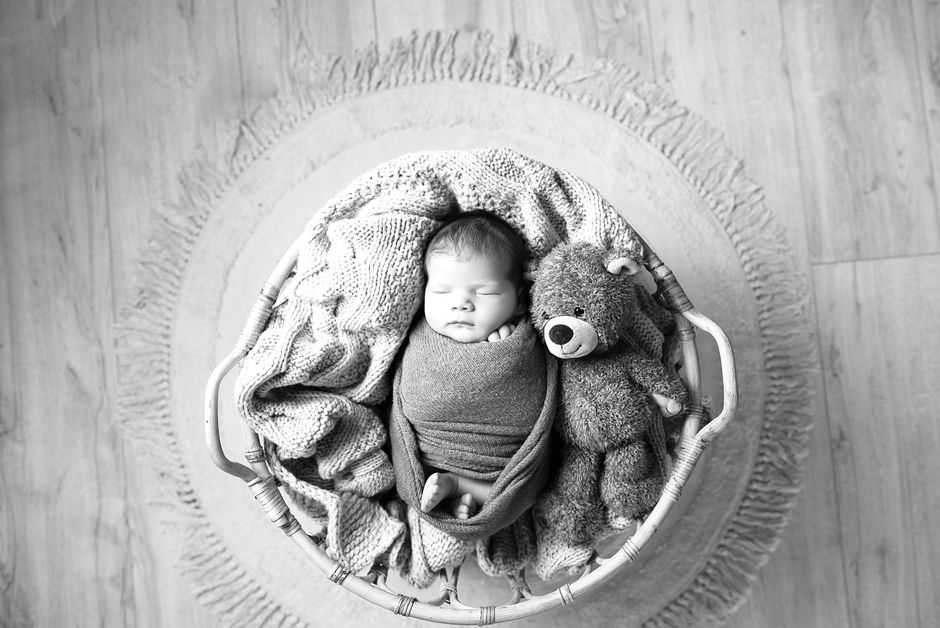
The trigger to stop swaddling is a behavior, not a birthday. The moment your baby begins showing signs of trying to roll, any arm-restricting product must come off for sleep, even if that happens weeks earlier than you expected.
Consumer Reports (2024) notes that rolling signs typically emerge between 8 and 12 weeks, though some babies show them earlier. The AAP advises on HealthyChildren.org to stop swaddling as soon as the infant starts trying to roll and to continue placing every baby on their back for every sleep. A baby who rolls while their arms are pinned can’t push up with their arms. That’s an immediate safety hazard.
Three signs mean it’s time to stop: pushing up on the arms during tummy time; arching the back or twisting the hips on a changing table; and shifting weight to one side while lying flat on their back. Any one of those is enough reason to retire the swaddle that night and move to the arms-free sleep sack.
The switch isn’t complicated. Because the arms-free sleep sack places no restriction on movement, nothing else needs to change when swaddling stops. Swaddles are generally suitable only until around 2 months; sleep sacks cover the stretch from birth through approximately 18 to 24 months per AAP guidance, carrying the baby through rolling, sitting, and well beyond.
Sleep Sack Fit, Temperature, and Safe Use
A correctly fitted sleep sack keeps fabric away from the face and leaves room for hip movement. Those two fit checks matter more than any brand name or price point.
At the neck and arm openings, the sack should sit snug enough that the baby can’t slip inside and push fabric over their face, but not so tight that it constricts. Cleveland Clinic notes that sleeveless sleep sacks avoid the suffocation concern tied to arm restriction, but correct sizing at the neck still matters for newborns. Use the manufacturer’s weight and size range as the guide; sizing isn’t standardized across brands.
At the lower body, the sack should allow the legs to bend and splay naturally. A sack that’s too small restricts hip movement, which matters for healthy hip development as well as comfort. Leave enough room in the lower half for the baby to kick freely.
Temperature matters too. A sleep sack replaces a blanket, so the warmth rating should match the room temperature. Dress the baby in a base layer suited to the room, then add the sleep sack over it. The CDC identifies sweating or a chest that feels hot to the touch as overheating signs. If those appear, remove a layer rather than opening the sack.
Tip: As a starting point, dress the baby in one more layer than you would wear comfortably in the same room, then check the chest warmth during the first nighttime feed.
What Not to Buy for Newborn Sleep
Two categories of sleep products do not belong in a newborn’s sleep space: weighted items and loose blankets.
Weighted swaddles, weighted sleep sacks, and weighted blankets are specifically identified by the CDC as unsafe for infants. Added chest pressure can interfere with breathing, and no calming benefit offsets that risk. According to HealthyChildren.org, the AAP is clear that swaddling does not reduce the risk of SIDS, so a weighted product that claims calming or safety benefits carries risk without any evidence-based upside.
Loose blankets, including muslin swaddles repurposed as crib covers after the swaddling phase, should not be in the sleep space for the first year. The AAP recommends a firm, flat sleep surface with no loose items in the crib. Babies should not sleep with loose bedding until at least 12 months, per AAP safe sleep guidance. The sleep sack is the practical solution for warmth during that entire window.
Sleep sacks typically cost more per unit than a basic swaddle but deliver far more uses. Two swaddles may serve for six to eight weeks; two sleep sacks carry a baby from birth well into the second year. The numbers favor the sleep sack.
The final call: register for one to two arms-free sleep sacks in newborn size before the birth. Add two to three traditional swaddles after spending a few days watching whether your baby settles with their arms held snug. That keeps the registry lean and matches what you actually buy to what your specific baby needs.
Key Takeaways
- An arms-free sleep sack is a safe, appropriate choice for any newborn from the start, filling the warmth gap that loose blankets cannot safely fill during the first year.
- Traditional swaddles earn their place only for babies who respond positively to arm containment; with an active window of around 2 months, they are a conditional purchase, not a registry requirement.
- Rolling attempts, not a calendar date, end the swaddling phase; watch for pushing up on arms, twisting the torso, or shifting weight to one side as early as 8 weeks.
- Once rolling begins, the arms-free sleep sack continues without any product change required, carrying a baby comfortably into the second year.
- Until the first birthday, the crib stays loose-blanket-free; keeping a correctly sized sleep sack as the nightly warmth layer is simpler and safer than managing blankets.
- Weighted sleep products are not a swaddle alternative; the CDC identifies weighted sleepers, swaddles, and blankets as unsafe for infants regardless of how they are marketed.
The registry decision gets clearer once you know what each product actually does. Sleep sacks fill the warmth gap that loose blankets can’t safely fill; swaddles calm the startle reflex for babies who respond to arm containment. Neither purchase is complicated, but the sequence matters: start with the sleep sack, then decide on swaddles once your baby shows you whether being wrapped helps.
When rolling signs arrive, often before the two-month mark, the swaddle phase ends and the sleep sack simply continues. No new gear, no new learning curve. Having the right items in the right quantities from the start means one fewer thing to sort out when you’re running on three hours of sleep.
Frequently Asked Questions
- Does a newborn actually need a swaddle or sleep sack?
- Every newborn can use an arms-free sleep sack as a wearable blanket from birth. A swaddle is optional, worth adding only if your baby seems unsettled from the startle reflex. Buy the sleep sack first; watch how your baby responds before deciding on swaddles.
- How many swaddles and sleep sacks should I buy for a newborn?
- Two arms-free sleep sacks covers most families, with one in use and one available after a spit-up or diaper leak. For swaddles, two to three is enough; the narrow use window means anything beyond three usually sits unused once the baby begins trying to roll.
- When exactly should I stop swaddling my baby?
- Stop the moment you see your baby pushing up on their arms during tummy time, arching and twisting their torso, or shifting their weight to one side while lying flat. The AAP and Consumer Reports (2024) both note these signs can appear as early as 8 weeks. Any of those cues means the swaddle comes off that night and the arms-free sleep sack takes over.
- Is an arms-free sleep sack safe for a newborn?
- Yes, when sized correctly. The neck and arm openings should sit snug enough to keep fabric away from the face, and the lower half should give the legs room to move freely. Cleveland Clinic notes that sleeveless sleep sacks do not carry the same suffocation concern as arm-restricting swaddles.
- What should a baby wear under a swaddle or sleep sack?
- Dress the baby in a base layer matched to room temperature, usually a onesie or footed sleeper. Use the sleep product’s warmth rating to guide layering. The CDC recommends watching for a hot chest or sweating as signs to remove a layer rather than opening the sack.
This article is for informational purposes only and does not replace professional medical advice. Always consult your pediatrician about your child’s health.