The Short Answer
- Two-way zip-up sleepers are fastest for night diaper changes: one pull from the foot end opens only the bottom while the chest stays covered and warm.
- Snap sleepers are worth having for newborns with cord stumps and for daytime use throughout the first year.
- Key features to look for: two-way zipper, zipper guard at the collar, covered zipper track, soft cotton fabric, footed design.
- Skip back-zip designs, decorative button closures, and all-snap full-body suits for overnight use.
- A practical starting stash for newborns: 3 to 4 zip-up sleepers plus 3 to 4 snap or wrap styles per size.
Zip-up baby sleepers win for most overnight diaper changes because one continuous zipper is faster than lining up six or eight snaps in the dark: the difference between 20 seconds and 2 frustrating minutes at 2 a.m. But snaps aren’t a dead end. For newborns with cord stumps, for better fit on very small babies, or when a full outfit removal is the cleaner option anyway, snaps earn their place. Here’s how to choose, and what to buy.
Zipper vs Snap Baby Sleepers for Night Changes: Bottom Line
Two-way zip-up sleepers are the fastest option for overnight diaper changes, and that speed advantage is the main reason to prioritize them. A zipper runs in one continuous motion and it’s done. Snaps require aligning each fastener individually, which takes longer and is harder to manage in low light. The practical gap shows up most clearly between about 6 weeks and 9 months, when night changes are frequent and every saved second counts.
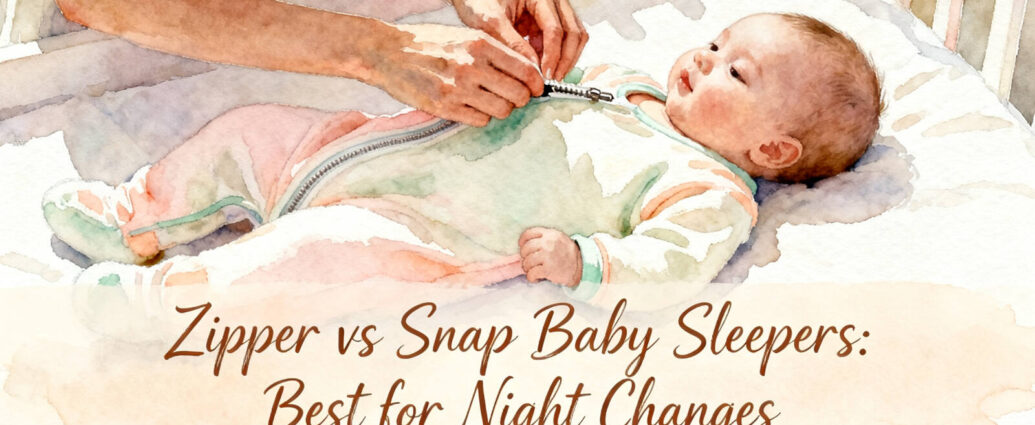
The two-way design is the specific feature that makes the biggest difference. A standard zipper opens from the collar down, meaning the whole garment has to open before you can reach the diaper. A two-way zipper opens from the foot end up, exposing only the diaper area while the baby’s chest and arms stay covered and warm. At 3 a.m., keeping the upper body undisturbed means a faster return to sleep for everyone.
Snaps aren’t a bad choice overall. They’re standard on daytime onesies and most parents use them without trouble all year. The issue is specifically at night, in low light, with a wriggling baby. That’s where the zipper’s speed matters most. AAP newborn guidance supports keeping nighttime routines calm and brief to help infants return to sleep, and a sleeper that cuts the change time in half is a direct way to do that.
How Each Closure Works at 2 a.m.
With a two-way zip-up sleeper, the night change takes three to four hand movements, all on one side of the garment: grab the foot-end zipper pull, slide it up just far enough to reach the diaper, change, slide it back down. The upper body is never touched. That’s why two-way zip-up sleepers are the consistent recommendation for overnight changes across parenting resources.
With a snap sleeper, the process depends on the design. A full-body snap suit typically has snaps running from the collar down the chest and along one or both legs, sometimes 8 to 12 total. Each one has to press in individually and line up correctly. Misalign one in low light and you either start over or leave the outfit slightly off until morning. Parents in parenting forums consistently describe snap sleepers as more frustrating in low light, especially on a baby who won’t hold still.
There’s one narrow scenario where snaps are actually faster: when you only need access to one leg area, some snap designs let you open just the lower-leg snaps without undoing everything else. A zipper opens either the full bottom section or the whole garment. For very targeted access, snaps have that flexibility.
Tip: Keep a small clip-on book light or dim amber nightlight at the changing table. Even with a two-way zipper sleeper, just enough light to see the pull cuts the change time and prevents fumbling.
When Snap Baby Sleepers Are the Better Choice
Snap and wrap-style sleepers are the more practical choice for newborns with cord stumps, very small or premature newborns, and daytime use throughout the first year. Knowing when each type makes sense helps you build a mix that actually covers your needs.
The umbilical cord stump is the biggest factor in the first weeks. The stump typically falls off between 1 and 3 weeks after birth. During that window, clothing that presses on or covers it can cause discomfort and slow healing. Kimono-style tops or side-snap sleepers naturally keep fabric away from the navel area. Some zip-up sleepers include a fold-down waistband that does the same, but snap and wrap designs give you more control over exactly what contacts the stump. HealthyChildren.org dressing guidance emphasizes choosing clothing suited to the specific situation, and for a newborn with a healing cord, navel clearance matters more than closure speed.
Very small or premature newborns can also do better in snap or wrap-style clothing. Zip-up sleepers in preemie or newborn sizes have a fixed opening width that can be hard to fit on a very small baby. Snap and wrap designs give you more room to adjust across the chest and legs, which matters when a baby is between sizes or gaining weight fast in the early weeks.
Daytime is another snap-friendly zone. The speed advantage of a zipper matters most at night. During the day, with better light and no urgency, snaps are completely workable. Most parents settle into snap onesies for daytime and zip-up sleepers overnight. And when a nighttime blowout means a full outfit change anyway, the two-way zipper’s diaper-only access doesn’t matter. In that case, pulling a snap suit off over the legs rather than lifting it over the shoulders, which risks spreading the mess, can actually be the cleaner move.
Baby Sleeper Features That Matter Most for Overnight Changes

Five features matter more than the brand name for overnight diaper changes. If a garment has all five, it’ll work well regardless of the label. If it’s missing two or more, you’ll notice at the worst possible hour.
| Feature | Why it matters | Zipper sleepers | Snap sleepers |
|---|---|---|---|
| Two-way zipper | Opens from foot end for diaper access without exposing chest | Actively look for it | Not applicable |
| Zipper guard (chin guard) | Keeps metal pull away from neck and face skin | Essential | Not applicable |
| Covered zipper track | Zipper teeth do not contact baby’s skin on inside | Essential | Not applicable |
| Soft cotton fabric | No scratching, breathable overnight, easy to wash | Yes | Yes |
| Footed design | No socks to lose overnight | Recommended | Recommended |
| Cord cutout or fold-down waist | Keeps pressure off healing umbilical stump | Look for in NB size | Easier to find |
| Roomy fit | Room to grow; no tight zipper track pressing on belly | Yes | Yes |
Not all sleeper listings make it easy to tell whether the zipper is one-way or two-way. In a store, check whether the pull is only at the collar (one-way, opens top-down) or also has a pull at the foot (two-way). When shopping online, search specifically for “two-way zipper” in the product description. If a sleeper doesn’t advertise the feature, it probably doesn’t have it.
The Mayo Clinic baby clothes guide identifies comfort, appropriate fit, and ease of dressing as the primary criteria for choosing infant clothing. Every feature in that table ties back to one of those three. If a sleeper checks those boxes, the brand is beside the point.
Tip: When buying online, check customer photos, not just brand photos. Parents often post pictures that clearly show zipper direction and track coverage in a way that product images don’t.
Baby Sleeper Designs to Avoid for Overnight Use
Some sleeper designs will cost you at 2 a.m. Knowing which ones to avoid saves you money and a lot of frustration.
- Back-zip sleepers. The zipper runs up the back, which means flipping the baby face-down or holding them sideways to open it. Impractical for a solo night change, and nearly impossible to manage one-handed.
- Decorative button closures. Buttons are the slowest closure on any infant garment. They combine all the disadvantages of individual fasteners with the added step of threading each one through a buttonhole in low light.
- Rigid zipper tracks on newborn sizes. In the first few weeks, a stiff zipper track that presses against the belly button area can be uncomfortable on a healing cord stump. Look for sleepers with a softer, more flexible track in the newborn and 0 to 3 month size range, or choose wrap and snap styles for this period.
- All-snap full-body suits for overnight. Fine for daytime outfits, but a full row of snaps from collar to ankle is exactly what you don’t want to deal with at 3 a.m.
- Sleepwear not labeled as sleepwear, in sizes 9 months and up. In the US, children’s sleepwear in sizes 9 months and larger must meet federal flammability standards set by the CPSC clothing safety standards. Items sold as “loungewear” or marked “not intended for sleepwear” may not meet those requirements. Check the label when buying garments for overnight use.
How Many Baby Sleepers to Buy by Age Stage
Newborns typically need 2 to 3 outfit changes per day in the early weeks, including overnight. Having enough sleepers to go 3 to 4 days between washes keeps laundry manageable without overstocking a size your baby will outgrow fast. Here’s a practical starting point by age range, with a mix that covers both the cord-stump newborn period and regular overnight use.
| Age range | Zip-up sleepers | Snap or wrap sleepers | Total per size |
|---|---|---|---|
| Newborn (0 to 3 months) | 3 to 4 | 3 to 4 | 6 to 8 |
| 3 to 6 months | 4 to 5 | 2 to 3 | 6 to 8 |
| 6 to 12 months | 4 to 5 | 2 to 3 | 6 to 7 |
The higher snap ratio in the newborn stage accounts for the cord-stump period and the fit flexibility that snap styles offer on very small babies. By 3 months, most parents naturally shift toward more zip-up sleepers for overnight and keep snaps for daytime onesies. One sizing note: newborn sizes typically fit roughly 5 to 9 pounds, but a baby born at 8 pounds may outgrow the newborn range within 2 to 3 weeks. Buying most of your stash in the 0 to 3 month size before birth and holding onto newborn receipts is a common, practical approach.
Tip: Leave tags on newborn-size sleepers you buy before birth. Many babies skip that size entirely or wear it for only a week or two, and being able to return unused ones saves money fast.
Key Takeaways
- Two-way zip-up sleepers are the fastest option for overnight diaper changes: one pull from the foot end opens only the bottom while the chest and arms stay covered.
- Buy 3 to 4 snap or wrap-style sleepers in newborn size for the cord-stump period and fit flexibility in the first 1 to 3 weeks.
- The five features that matter most: two-way zipper, zipper guard at the collar, covered zipper track, soft cotton fabric, and footed design.
- Skip back-zip designs, decorative button closures, and all-snap full-body suits for overnight use.
- After 3 months, shift the ratio to 4 to 5 zip-up sleepers and 2 to 3 snap styles per size range.
- From 9 months up, check that overnight garments are labeled as sleepwear and meet CPSC flammability standards.
Two-way zip-up sleepers should make up the majority of your overnight stash after the newborn stage: one zipper pull at 2 a.m. beats aligning eight snaps every time. Snap and wrap styles earn their place in those first weeks, and they’re perfectly fine for daytime all year. Start with 3 to 4 of each type, pay attention to which sleepers you actually reach for in the dark, and stock up on what works. The right sleeper is the one that gets the job done fast so everyone can go back to sleep.
Frequently Asked Questions
Which is easier for night changes, zip-up or snap baby sleepers?
Zip-up sleepers with a two-way zipper are easier for most night changes. One pull from the foot end opens only the diaper area while the chest stays covered. Snap sleepers require aligning multiple individual fasteners in low light, which takes longer and is harder with a wriggling or crying baby.
What is the advantage of a two-way zipper on baby sleepers?
A two-way zipper has pulls at both the collar and the foot, so it can open from either end. For diaper changes, open from the foot end and slide the zipper up just far enough to reach the diaper. The baby’s chest and arms stay covered and warm throughout. A standard top-down zipper requires opening the whole garment to reach the diaper area.
Are snap sleepers ever better than zipper sleepers?
Yes, in specific situations. Snap and wrap-style sleepers work better for newborns with cord stumps because they keep fabric away from the navel. They also give more adjustability in fit for very small or premature newborns. For daytime use, snaps are completely practical. And for overnight blowouts that require a full outfit change, a snap suit can be easier to remove without spreading the mess.
Should I buy both zipper and snap sleepers for a newborn?
Yes. A starting mix of 3 to 4 zip-up sleepers and 3 to 4 snap or wrap-style sleepers in newborn size covers the cord-stump period in the first weeks and gives you the speed of a zipper for routine overnight changes. After about 3 months, most parents shift toward more zip-up sleepers for overnight and keep snaps for daytime onesies.
What features should I look for in a sleeper for easy overnight diaper changes?
Look for a two-way zipper that opens from the foot end, a zipper guard at the collar to protect the neck and face, a covered zipper track so the teeth don’t contact the baby’s skin, soft 100% cotton fabric, and a footed design. In newborn sizes, a fold-down waistband or cord cutout helps keep pressure off the healing umbilical stump.
This article is for informational purposes only and does not replace professional medical advice. Always consult your pediatrician about your child’s health.