The Short Answer
Yes, newborn sleep in the range of 14 to 20 hours a day is completely normal, particularly in the first two weeks of life.
- Many healthy newborns sleep 14 to 17 hours in a 24-hour period, with the first days often reaching 18 to 20 hours.
- Sleep arrives in short stretches of 2 to 4 hours, broken by hunger rather than any clock or schedule.
- Total hours are not the best indicator of health. Feeding frequency, wet diaper count, and brief alertness during the day matter more.
- Dangerous lethargy, where a baby cannot be roused or feels limp, is distinct from normal deep sleep.
- Total sleep decreases gradually through the first year as circadian rhythms develop and wake windows lengthen.
Behind those long sleep totals is a simple explanation: a tiny stomach empties quickly, and a developing brain needs deep rest between feeds. So the 24-hour picture is mostly sleeping, with brief feeding windows scattered through it. This article covers what typical sleep looks like from birth through 12 months, what separates healthy deep rest from true lethargy, and the specific signs that mean a call to the pediatrician makes sense.
How Much Do Newborns Sleep?
Sleep in the newborn weeks arrives in short, irregular bursts shaped by a stomach that empties quickly and a brain that has not yet learned to tell night from day. The American Academy of Pediatrics offers detailed guidance on what healthy infant sleep looks like from birth through the first year.
Newborn sleep arrives in short stretches of 2 to 4 hours, with hunger driving each wake-up rather than any internal clock or routine. Many parents describe the first week as feed, burp, sleep, repeat, with almost nothing else in between.
By 2 to 3 months, most babies start showing slightly longer alert stretches and a loosely recognizable day-and-night pattern. Actual consolidated nighttime sleep, meaning 5 to 6 hours in a row, typically appears somewhere between 3 and 6 months, though the range varies quite a bit from baby to baby.
The table below gives a rough picture of how sleep totals and patterns typically shift across the first year.
| Age range | Typical daily sleep | Sleep pattern |
|---|---|---|
| Birth to 4 weeks | Often 16 to 20 hours | Short stretches, wakes to feed around the clock |
| 1 to 3 months | Often 14 to 17 hours | Slight day-night awareness starts to form |
| 3 to 6 months | Often 13 to 16 hours | Longer daytime naps, night stretches lengthen |
| 6 to 9 months | Often 12 to 15 hours | Two to three naps, more alert during the day |
| 9 to 12 months | Often 12 to 14 hours | Two naps, some consolidation toward night sleep |
Tip: Write down wake and sleep times for the first week or two. Even rough notes help you confirm your baby is waking often enough to feed, which is usually more reassuring than counting total hours slept.
Why Newborn Sleep Looks Different From Adult Rest
A newborn spends a much larger share of sleep time in active, or REM-equivalent, sleep than an adult does. That means lighter sleep, more noise, and more disruption. You may notice twitching, fluttering eyelids, irregular breathing, small sounds. None of that signals discomfort or pain.
Newborns also lack a developed circadian rhythm. The 24-hour internal clock that tells adults when to sleep and when to wake doesn’t work reliably in the first few weeks. Exposure to natural daylight during awake periods, and dim light at night, gradually helps the brain start sorting day from night. MedlinePlus newborn care covers how infant behavior and sleep patterns evolve through the first months of life.
Because active sleep is lighter, some newborns rouse briefly and then settle back down on their own. Parents sometimes log these as wake-ups when the baby is actually completing a normal sleep cycle. A newborn who stirs, makes noise, and settles again without full crying is cycling normally, not signaling a problem.
Spotting Normal Newborn Sleep vs. True Lethargy
Deep, still sleep and dangerous lethargy can look similar at a glance, but the key difference is response. A sleeping baby will react when stimulated, even if briefly and groggily. A lethargic baby won’t, or will respond so weakly it’s alarming. Mayo Clinic outlines typical newborn behavior and the signs that warrant medical attention.
Normal deep sleep looks like this: your baby is still and quiet, breathing steadily, and when you touch or lift them, there’s some muscle tone. They may grimace, startle slightly, or turn their head. When you try to feed them, they may be groggy but will latch or take a bottle with gentle encouragement within a minute or two.
Concerning lethargy looks different. Your baby doesn’t respond to touch or voice, feels floppy or limp in your arms, won’t wake for a feed even after several minutes of gentle stimulation, or seems pale or mottled. Those aren’t signs of a tired newborn. They call for a same-day call to the pediatrician, or immediate emergency care depending on severity.
One practical checkpoint: if your newborn skips two feeds in a row without waking, that’s worth a call even if they seem fine from across the room. Healthy newborns are driven by hunger, and missing multiple feeds in succession is unusual enough to flag.
How Newborn Sleep Patterns Shift Over the First Year
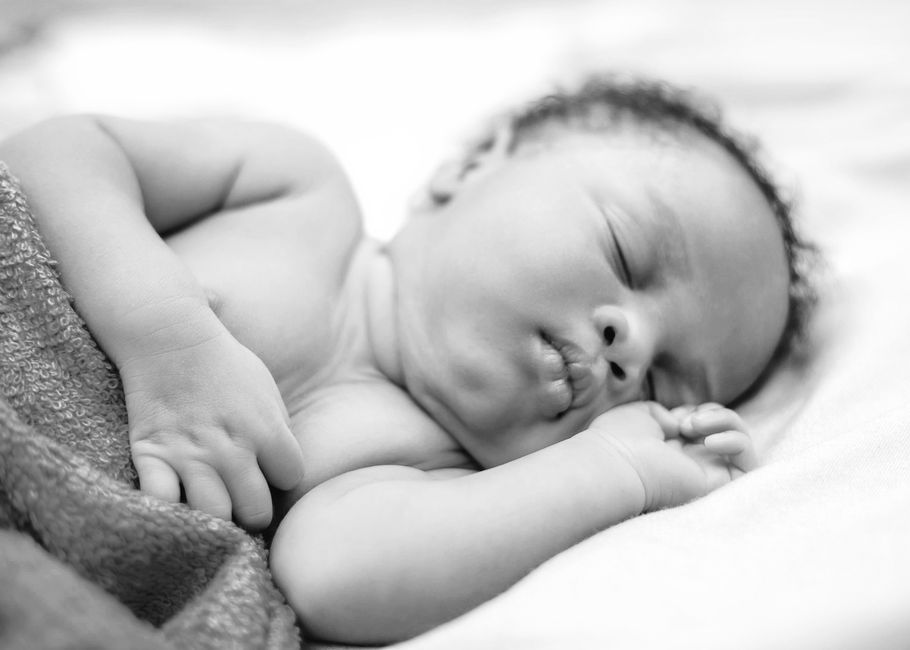
Newborn sleep patterns change most significantly around 3 months and keep shifting through month 12. The two biggest transitions are the emergence of day-and-night rhythm around 6 to 10 weeks, and the consolidation of nighttime sleep into longer stretches around 3 to 5 months. Neither happens on a fixed schedule, and the range of normal is wide. CDC’s infant sleep page covers the environmental factors that support healthy infant rest.
Between 2 and 4 months, many babies begin sleeping one longer stretch at night alongside shorter daytime naps. Total sleep drops slightly during this period as alertness increases. They’re spending more time looking at faces, following movement, and responding to sounds during wake periods.
By 6 months, most babies have moved to two or three daytime naps and a longer overnight period. By 9 to 12 months, many are ready for a two-nap schedule. Total daily sleep keeps decreasing gradually, and individual variation stays wide throughout the first year.
What to Check Before You Worry About Your Baby’s Sleep
Diaper output, feeding frequency, and alertness during wake periods give you more reliable information than counting sleep hours. If all three look normal, a baby who’s sleeping a lot is almost always fine. If any one is off, that’s worth a call to the pediatrician regardless of sleep totals.
Wet diapers are one of the clearest indicators of adequate feeding in a newborn. In the first few days, a small number of wet diapers is expected while milk supply is establishing. By day four or five, most healthy newborns are wetting diapers regularly throughout the day. If diapers stay dry for extended stretches, or output drops suddenly, that matters more than any sleep total.
Alertness during the brief wake windows your baby does have is the other key signal. A healthy newborn who wakes, feeds, looks around briefly, and then cycles back to sleep is doing exactly what their developing brain needs. A newborn who wakes but seems blank, can’t focus, or shows no interest in feeding is a different situation and deserves a prompt call.
Tip: If you’re unsure whether a sleepy stretch is normal, offer a feed. A healthy newborn in deep sleep will usually accept feeding within a few minutes of gentle encouragement. A baby who can’t be roused at all needs a call, not a wait.
When to Call Your Pediatrician
Call your pediatrician soon if your newborn:
- Misses two or more feeds in a row without waking on their own
- Has noticeably fewer wet diapers than the day before
- Seems unusually difficult to rouse but eventually responds to stimulation
- Has yellow-tinted skin or eyes, as jaundice can cause excessive sleepiness in newborns
- Is under 3 months old and has a fever above 100.4 degrees Fahrenheit
Seek emergency care now if your newborn:
- Cannot be woken at all, or is unresponsive to touch and voice
- Feels limp or floppy with little or no muscle tone when you pick them up
- Has lips, fingertips, or skin that appear bluish or grayish
- Is breathing very rapidly, with visible chest pulling between the ribs on each breath
- Stops breathing for a prolonged stretch, 20 or more seconds at a time
Key Takeaways
- Many newborns sleep 14 to 17 hours or more per day in the early weeks, with totals tapering gradually by month 12.
- Sleep arrives in short 2 to 4 hour stretches driven by hunger, not any schedule.
- By day 4 to 5, adequate wet diapers and regular feeds are more reliable health checks than sleep hour counts.
- By the end of week 1, a healthy sleeping baby still responds to touch. No response warrants a same-day pediatrician call.
- Circadian rhythm takes 3 to 4 months to develop, so predictable day-and-night patterns emerge slowly and vary by baby.
- Two or more missed feeds in a row, or no response to stimulation, means calling the pediatrician the same day.
A newborn sleeping most of the day is doing exactly what a growing newborn brain is built to do. As the weeks pass, wake windows grow longer, alert periods get more interactive, and a loose daily rhythm starts to form. When that shift happens depends on the baby, not the calendar. In the meantime, track the signals that actually matter, feeds and diapers, and let the sleep hours take care of themselves.
Frequently Asked Questions
- Is it normal for a newborn to sleep 20 hours a day?
- Yes, 20 hours in a day is within the normal range for a healthy newborn, especially in the first week of life. As long as your baby wakes to feed regularly and has enough wet diapers, very long sleep totals aren’t a cause for concern by themselves.
- How do I know if my newborn is sleeping too much?
- Count feeds and wet diapers rather than hours. A newborn who wakes regularly to feed and has adequate diaper output is almost always fine. If your baby is impossible to rouse, misses multiple feeds, or has very few wet diapers, those signs are worth a call to the pediatrician.
- Do newborns need a set sleep schedule?
- No. Newborns lack a developed circadian rhythm and can’t follow a clock-based schedule in the first several weeks. The pattern that emerges is feed, sleep, feed, sleep. Loose day-and-night awareness typically appears around 6 to 10 weeks, with more predictable patterns forming closer to 3 to 4 months.
- What should a normal newborn sleep cycle look like?
- A newborn sleep cycle is shorter than an adult’s, alternating between lighter active sleep and deeper quiet rest. During active phases, parents often notice small movements, facial expressions, and irregular breathing. After several cycles, hunger ends the stretch and the baby wakes to feed.
- At what age do babies stop sleeping 20 hours?
- Long sleep totals usually start shortening in the 4 to 6 week range for many babies, with noticeably more alertness by 2 to 3 months. The pace varies from one baby to the next, so there’s no single date when it happens.
This article is for informational purposes only and does not replace professional medical advice. Always consult your pediatrician about your child’s health.