
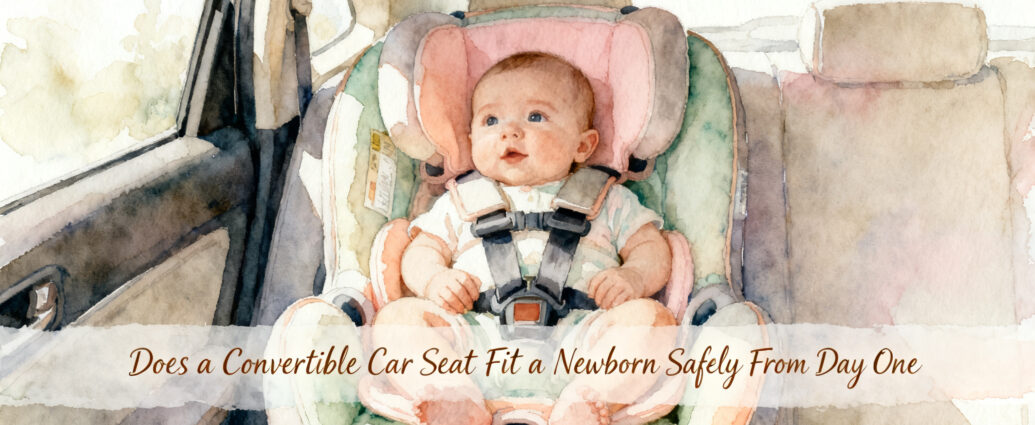
Newborn Convertible Seat: The Short Answer
- A newborn convertible seat can work from the first ride home, but only when the specific seat’s weight minimum matches your baby’s measured size.
- Many convertible seats accept newborns starting at 4 to 5 pounds rear-facing; always verify your model’s manual, not a generic size chart.
- Rear-facing is required for all newborns. The word “convertible” describes future forward-facing toddler use, not a choice available to newborns.
- Five things to verify before the first drive: minimum weight, harness slot height, recline angle, head position, and manufacturer-approved insert.
- If fit is uncertain, a certified child passenger safety technician (CPST) can check in person, often at no cost.
A newborn convertible seat can work from the first hospital trip home when five model-specific fit checks all pass. The AAP car seat guidance says every infant should ride rear-facing from that very first trip home. This article walks through each check so you can confirm fit before you need it.
Can a Newborn Convertible Seat Work From Day One?
Many convertible seats work from day one. The AAP says rear-facing starts with the very first hospital trip, so a newborn in a convertible is correct when the fit checks pass. The word “convertible” just describes the seat’s future life as a forward-facing toddler seat. For a newborn, rear-facing is the only position, whatever the seat type.
The number that matters most is the seat’s minimum rear-facing weight, and it differs by model. According to the AAP car seat product listing, some convertible seats begin at 4 pounds rear-facing while others require 5 or more. Those differences come from how each seat’s harness geometry and recline range are built. A baby who arrives below a seat’s stated minimum shouldn’t travel in that seat until they reach it.
Weight alone doesn’t guarantee a good fit. A seat that clears the weight minimum can still fit badly if the harness slots sit too high for the baby’s torso length, the seat won’t recline far enough for a newborn’s proportionally heavy head, or the shell doesn’t support the baby’s posture. Those four remaining checks matter just as much as the number on the label.
Five Fit Checks for a Good Newborn Convertible Seat
Five model-specific criteria determine whether a newborn convertible seat fits correctly, and each is drawn from your seat’s manual rather than a general size guide. The numbers vary significantly across models, which is why a box label or generic chart is not a reliable substitute for the manual.
| Fit Check | What to Verify | Where to Find It |
|---|---|---|
| Minimum rear-facing weight | Baby meets or exceeds the seat’s labeled minimum | Seat manual or side label |
| Harness slot position | Slots sit at or below the baby’s shoulders rear-facing | Visual check with baby seated |
| Recline angle | Seat has a newborn recline position and reaches it | Seat manual; recline indicator |
| Head position | No forward slump or head flop with baby buckled in | Visual check with baby seated |
| Newborn insert | Only the manufacturer-listed insert is in place | Seat manual or box contents |
Harness slot position is the check most often skipped. For a rear-facing newborn, the straps should come through at or below shoulder level. When only upper slots are available and they sit noticeably higher than the baby’s shoulders, the harness pulls upward on impact instead of holding the chest at the right point. Some seats offer only one or two slot positions, so they won’t align with every newborn’s body shape.
In its car seat coverage, Consumer Reports has noted that some convertible seats can sit too upright for a newborn even when the bubble indicator reads within the acceptable range. A newborn’s head is proportionally heavy. If the seat angle is too steep, the head tips toward the chest instead of resting back against the headrest. Check whether your specific model has a labeled newborn recline setting in the manual before the first use.
Tip: Look for a section in your seat’s manual labeled something like “infant use” or “newborn positioning.” It will show the correct insert configuration and recline setting for the smallest babies the seat supports.
Convertible Seat vs. Infant Carrier: Practical Tradeoffs
An infant carrier typically fits a small newborn snugly without extra setup; a convertible seat requires careful fit checks but handles both the infant and toddler stages in one purchase. The choice really comes down to two things: how often you plan to carry a sleeping baby indoors without unbuckling, and whether your newborn comfortably meets the convertible’s fit criteria from day one.
| Factor | Convertible Seat | Infant Carrier | Tradeoff |
|---|---|---|---|
| Use from birth | Yes, model-specific | Yes, designed for birth | Convertible requires careful spec check; infant carriers typically fit tiny newborns snugly out of the box |
| Portability | Stays installed in the car | Carry seat indoors | Infant carrier easier when baby sleeps during transfers |
| Long-term rear-facing | Often two or more years | Typically replaced before toddler years | Convertible eliminates a later seat purchase |
| Upfront cost | Higher single purchase | Lower upfront | Infant carrier plus a later convertible costs more total |
An infant carrier is built around a small, curled newborn from the start. The shell and harness geometry are made for tiny babies without needing a recline check or insert configuration. A convertible is built for the toddler years, so the shell is larger and newborn fit depends on getting the recline and insert right before that first trip.
The long-term math favors the convertible. The AAP rear-facing guidance recommends staying rear-facing until the seat’s maximum height or weight limit is reached, and many convertible seats hold that position for two years or longer. For families watching a registry budget, a convertible-from-birth plan with a solid fit check is a reasonable call. If portability matters more in those early months, starting with an infant carrier and switching later works just as well.
How to Test a Newborn Convertible Seat Fit at Home

Three visible observations confirm whether a newborn convertible seat fit is correct before the first real drive. Each takes under a minute with the baby buckled in at the seat’s newborn recline setting, as described in the manual.
First, check the harness slots. They should come through at or below shoulder level, not above. If the only available slots on your model sit clearly above the shoulder line, the harness geometry may not match this baby’s torso length well enough for the seat to work right now.
Second, look at the head. With the seat at its newborn recline, the head should rest against the seat back without tipping forward or falling to one side. If the head drops forward despite the correct recline setting, check whether a manufacturer-approved newborn insert came with the seat and position it as the manual shows. If the head still drops after that, the seat’s angle is probably too upright for this baby.
Third, check harness snugness. With the harness tightened per the manual, the strap at the shoulder should have no pinchable slack. NHTSA car seat guidance covers this check in detail for anyone who wants a full walkthrough. The chest clip should sit at armpit level, not on the stomach or the neck. If any of these three things don’t look right, an in-person check with a certified CPST is the right move before the first drive.
What to Buy, What to Skip, and When to Get Help
If you’re choosing one seat for the full first year and beyond, look for a convertible with the lowest available rear-facing minimum and a manufacturer-included newborn insert. Many convertible seats start at 5 or 6 pounds with the included insert. Models that begin at 4 pounds give more margin for smaller babies and are worth looking for if your budget allows.
Skip any padding, inserts, or head-support pillows sold separately unless your seat’s manufacturer explicitly says they’re compatible with your exact model. Use only the newborn insert that came in the box, set up exactly as the manual shows. That goes for aftermarket “head positioner” products too. They’re not tested alongside the seat and can interfere with how the harness tightens.
If portability matters in the newborn stage, an infant carrier typically fits a tiny baby more snugly out of the box and needs less setup. You’ll buy a convertible later, but for many families, three to four months of easier transfers makes that second purchase worth it. Both seat types, used correctly with the right fit, do the same job for the baby in the car.
Tip: NHTSA’s website includes a free locator tool to find a certified child passenger safety technician near you by ZIP code. Most CPST checks cost nothing and are completed well within half an hour.
Key Takeaways
- A convertible seat works from birth only when the baby meets that specific model’s rear-facing weight minimum.
- Rear-facing from the first hospital trip is AAP-required; “convertible” refers to future toddler use, not a newborn option.
- Weight alone is not enough: harness slot height, recline angle, and head position must all pass.
- Use only the manufacturer-included newborn insert; aftermarket padding can block correct harness tightening and is not tested with the seat.
- An infant carrier is more portable early on; a convertible-from-birth plan saves money but requires a solid fit check first.
- A free CPST check through NHTSA’s locator confirms everything before the first drive and typically costs nothing.
When all five fit criteria check out, you have a seat that’ll carry your child through the rear-facing years and beyond, with no swap needed when most infant carriers hit their upper limits. Getting the fit right before that first hospital trip is the whole task; after that, the seat handles years of rear-facing travel and the eventual forward-facing transition without further configuration. Children who start correctly fitted in rear-facing position often remain there well past their second birthday, outgrowing the need to revisit setup entirely. If anything about the installation still feels uncertain before you leave, an in-person fit check is a straightforward next step and easy to arrange.
Frequently Asked Questions
- Can a newborn safely use a convertible car seat from the first ride home?
- Yes, provided the seat’s rear-facing weight minimum matches the baby’s actual size and all five fit criteria pass. Per the AAP, rear-facing starts with the first hospital drive. Some convertible seats begin at 4 pounds; others require 5 or more, so the specific model always matters.
- What minimum weight and height should a convertible car seat have for a newborn?
- Many convertible seats begin at 4 or 5 pounds rear-facing. Height minimums vary by model; most require only that the baby’s head stay below the top of the shell. Verify the exact figures in your seat’s manual rather than relying on a general size chart.
- How can you tell whether a newborn fits correctly in a convertible car seat?
- Three signs confirm a good fit: harness slots sit at or below the baby’s shoulders, the head does not tip forward or slump, and no slack can be pinched from the strap at the shoulder. A CPST can verify all three in person if any check is unclear.
- Should you buy an infant car seat instead of a convertible car seat for the first year?
- Neither option suits every family equally. An infant carrier is portable and typically hugs a small newborn snugly out of the box. A convertible costs more upfront but handles both the infant and toddler stages in one purchase. The decision turns on portability preferences and your baby’s birth size.
- What should you do if your newborn slumps or the harness does not fit correctly?
- Add the manufacturer-approved newborn insert if your seat includes one and position it as the manual shows. If slumping or a poor harness fit continues after that, locate a certified CPST through the NHTSA website before driving. Never substitute aftermarket padding as a workaround.
This article is for informational purposes only and does not replace professional medical advice. Always consult your pediatrician about your child’s health.