The Short Answer
- 3 to 4 breastfeeding bottles covers direct nursing with one or two pumped feeds a day.
- Two to three pumped feeds while nursing the rest of the day: 4 to 6 bottles, depending on washing frequency.
- Daycare with breast milk or mostly pumped feeding: 6 to 10 bottles.
- Storage containers, bags, and collection cups are separate registry items and are not counted as feeding bottles.
- Start with a small set, test one bottle style, then add more once your baby accepts it.
How many breastfeeding bottles you need comes down to your pumping schedule, your washing routine, and whether a caregiver or daycare is part of the picture. The exact count depends on how many feeds happen at the breast and how often bottles get washed. This guide covers five feeding plans, a simple calculation formula, and the difference between feeding bottles and storage gear, so your registry actually covers what you need.
How Many Breastfeeding Bottles to Buy Before Birth
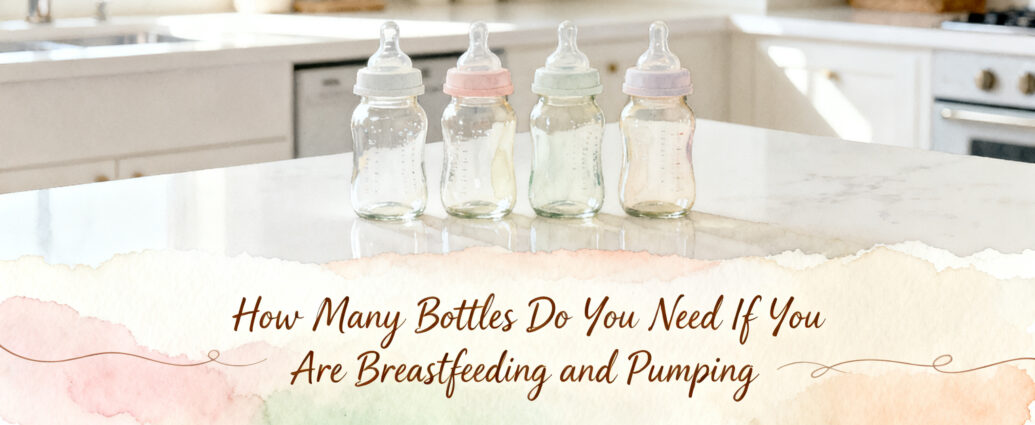
Start with 3 or 4 bottles in a single brand. Breastfed babies often take longer to accept a bottle nipple than formula-fed babies, and what works varies a lot by nipple shape, flow speed, and bottle material. Buying a 10 or 12-pack before birth is one of the most common registry regrets among nursing parents. A big set your baby rejects is a pricey mistake to make before you know what works.
According to AAP breastfeeding guidance, introducing about 1 ounce of pumped milk each day around 4 weeks, after nursing is established, helps a breastfed baby accept a bottle nipple without disrupting direct nursing. That early phase only needs one clean bottle per session.
A small starter set lets you test nipple acceptance before committing to a full supply. If your baby takes to it, ordering more of the same style is simple. If not, you’re out a small set rather than a shelf of gear that never gets used.
Bottle refusal is common with breastfed babies and doesn’t signal a problem with your milk or your nursing relationship. Timing, temperature, the nipple style, and even who’s offering it all affect whether a baby takes a bottle on a given day. Starting small means switching to a different nipple or brand stays affordable if you need to.
Breastfeeding Bottle Count by Feeding Plan
The Cleveland Clinic puts typical bottle needs at 3 to 4 for families who mostly breastfeed and 8 to 10 for families who mostly or completely bottle-feed breast milk. The table below maps those ranges to five feeding scenarios, so you can find the row that fits your plan.
These starting figures assume a mix of direct nursing and pumped feeds. The more feeds happen at the breast, the fewer bottles you need in rotation at any given time. A parent who nurses most feeds and uses pumped milk only for a partner’s shift sits at the low end. A parent pumping for daycare several days a week starts in the middle and works up.
| Feeding Plan | Pumped Feeds per Day | Starter Bottles | Key Tradeoff |
|---|---|---|---|
| Direct nursing, rare pumped bottle | 0 to 1 | 2 to 4 | Low upfront cost; may not cover an unplanned absence |
| One pumped feed daily | 1 | 3 to 4 | Manageable with daily washing; tight if washes are skipped |
| Two to three pumped feeds daily | 2 to 3 | 4 to 6 | Works with twice-daily washing; short with once-daily |
| Daycare with breast milk | 3 or more | 6 to 8 | One per daycare feed plus spare; needs nightly wash |
| Mostly or completely pumped | 6 or more | 8 to 10 | Approaches full bottle-feeding needs; more spares reduce stress |
Use this as a starting estimate. Feeding plans shift in the first few weeks, and adding bottles in small batches is easier than returning a large unopened set.
How to Calculate Your Exact Bottle Count
To find your personal bottle count, divide daily pumped feeds by daily wash rounds, round up to the next whole number, and add 1 or 2 clean spares for overlap. It works for any schedule.
A concrete example: 3 pumped feeds, 1 wash per day gives you 3 divided by 1, a base of 3, plus 2 spares, so 5 bottles total. Wash twice a day and that same 3-feed schedule drops to 2 (3 divided by 2, rounded up) plus 2 spares, so 4 bottles. Washing more often genuinely reduces how many you need on the shelf.
The CDC infant feeding hygiene guide recommends cleaning and drying all infant feeding parts after every use. That’s worth factoring in: build your bottle count around your household’s realistic wash-and-dry window, not a fixed universal number.
Tip: Running bottles through a dishwasher on a sanitize cycle overnight can shrink your required count. It counts as a second wash round without any added effort.
Feeding Bottles vs Storage Containers
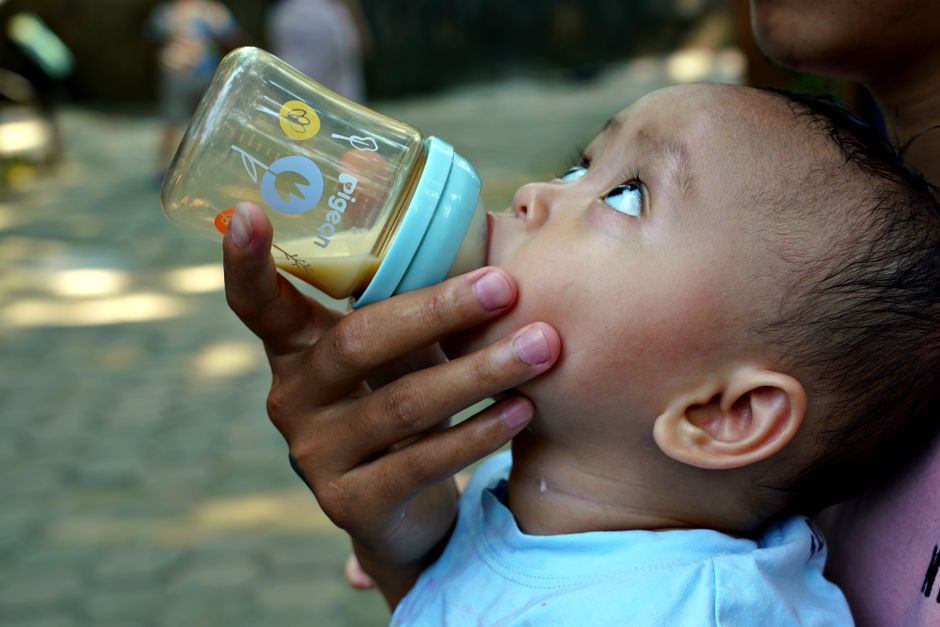
Feeding bottles and storage containers are two separate product categories, and mixing them up leads to overbuying one and running short on the other. A feeding bottle has a nipple and goes to your baby at a feed. A storage container, bag, or pump collection cup keeps milk cold between pumping and serving.
According to CDC breast milk storage guidance, expressing and storing milk in small batches of 2 to 4 ounces, the amount typically offered at one feeding, reduces waste. The AAP expressed milk guide makes the same batching recommendation.
Some pump models include collection cups that connect directly to compatible feeding bottles, cutting out a transfer step and trimming your registry list. Others need milk transferred from a collection cup to a storage bag first, then to a feeding bottle at serve time. Check your pump’s compatibility before building out the storage section of your registry so you don’t register for things your pump already handles.
Tip: If you plan to send milk in storage bags and have caregivers transfer it into feeding bottles at the center, you need fewer home feeding bottles than a parent who sends a complete set each day.
What Size Bottles for a Breastfed Baby
Start with 4-ounce bottles for the first 3 to 4 months. Early pumped feeds typically run 2 to 4 ounces, so a 4-ounce bottle fits that serving size without asking caregivers to fill a large bottle halfway. Add a few 8-ounce bottles around 4 months when per-feed volume typically grows.
Nipple flow rate is a separate choice from bottle size. Breastfed babies control their own milk flow at the breast, and many feeding specialists suggest starting with a slow-flow or preemie-flow nipple when introducing a bottle. Moving up to a faster flow once the baby’s comfortable is easy. Going back is harder, especially if you’ve already stocked up on fast-flow nipples your baby doesn’t tolerate.
Most nipple sizes fit any bottle within the same brand, but cross-brand compatibility is inconsistent. If your baby accepts a particular nipple shape, buying spare nipples of that type is usually more practical than switching to a different bottle brand entirely. Glass and stainless steel bottles hold up better than plastic over repeated sterilization cycles, though they weigh more, which matters once a baby typically starts holding the bottle on their own, around 6 months.
How Many Breastfeeding Bottles for Daycare, Partners, and Travel
For daycare, plan one bottle per expected feed during daycare hours plus one spare, washed nightly. A baby taking 3 feeds during an 8-hour day needs 4 daycare-ready bottles. A parent who wants a two-day buffer without nightly washing can double that to 8.
Partner feeds and overnight shifts follow the same math: one bottle per planned hand-off, plus one spare clean and ready before you sleep. According to the National Childbirth Trust (2025), newborns feed at least 8 times in 24 hours. If a partner handles two overnight pumped feeds, two or three bottles lined up before the first wake-up gets through that shift without a middle-of-the-night wash.
Travel adds its own variable. Without reliable sink and drying access, 2 extra bottles beyond your daily count gives you a full day of buffer. A small bottle brush and a few single-use sterilizer bags weigh almost nothing and can save you from a scramble on longer trips.
Tip: Label every bottle and nipple with your baby’s name and the date before each drop-off. Most centers require it, and labeled gear is less likely to get mixed up or sent home with the wrong family.
Key Takeaways
- 3 to 4 bottles is a practical start for a nursing parent who pumps one or two feeds a day.
- Divide daily pumped feeds by daily wash rounds, round up, then add 2 spares for your personal count.
- For daycare, count one bottle per feeding session at the center, add a spare, and wash the full set each night.
- 4-ounce bottles match early breastfed serving sizes; add 8-ounce ones after 4 months.
- Storage containers and collection cups belong on the registry as a separate category with their own quantity plan.
- Test one bottle style before expanding to a full supply.
Your bottle count is a logistics question that shifts as your feeding plan changes. A routine planned before birth rarely matches the one actually running by week six, and adjusting is completely normal. Register for a small tested quantity and leave room to add more. Treat the first bottles as a trial, not a commitment. If your baby refuses every bottle for several days in a row, that’s a recognized pattern with breastfed babies and worth talking through with a certified lactation consultant, who can go over nipple selection and introduction timing with you. The right bottle count is whatever keeps clean options available without filling a cabinet with bottles you never use.
Frequently Asked Questions
- How many bottles do I need if I am breastfeeding and pumping?
- Nursing with one or two pumped feeds a day typically calls for 3 to 4 feeding bottles. Mostly or completely pumped feeding often needs 8 to 10, according to the Cleveland Clinic. The count tends to shift as your nursing and pumping pattern settles over the first couple of months.
- How many bottles should I buy for one pumped bottle a day?
- Three is the technical minimum: one in use at the feed, one dirty waiting to be washed, and one clean spare. Most parents find 4 more comfortable, adding a second spare so a delayed wash doesn’t leave the next feed without a clean bottle.
- Do I need separate bottles for feeding and storing breast milk?
- Yes. Feeding bottles go to your baby with a nipple attached. Storage bags are single-use; rigid storage containers can be washed and reused across multiple pumping sessions. Some pumps connect collection cups directly to compatible feeding bottles, which cuts the total items you need. Otherwise, plan for both types as separate registry categories.
- Should I buy 4-ounce or 8-ounce bottles for a breastfed baby?
- Start with 4-ounce. Early pumped feeds typically run 2 to 4 ounces, so smaller bottles limit leftovers from partially finished feeds. Buying two 4-ounce and two 8-ounce bottles at the start lets you test both before committing to a full set. Shift to 8-ounce as the primary size around 4 months.
- How many bottles do I need for daycare if I am breastfeeding?
- One bottle per expected daycare feed plus one spare, washed nightly, covers each day. For 3 daycare feeds, that’s 4 bottles. Certain childcare facilities accept milk in bags and pour it into their own bottles at feed time. Confirm the center’s policy before buying a daycare-specific bottle set.
This article is for informational purposes only and does not replace professional medical advice. Always consult your pediatrician about your child’s health.