The Short Answer
- 7 to 10 onesies and 5 to 7 sleepers in 0-3 month size covers most families doing laundry every 2 to 3 days.
- Buy fewer newborn-size pieces and more 0-3 month pieces – many babies outgrow newborn size within 2 to 4 weeks.
- The CDC recommends a firm sleep surface with only a fitted sheet – plan on 2 to 3 fitted sheets and 3 to 4 sleep sacks instead of loose blankets.
- Most newborns typically go through 8 to 12 diapers per day – buy only a small pack of newborn size before birth and stock up on Size 1.
- Skip wipe warmers, bumper pads, newborn shoes, and special occasion outfits beyond 1 to 2 pieces.
Getting newborn quantities right before baby arrives is the difference between a registry that works and a closet full of items your baby outgrows before you open them. The math is simple: how many outfit changes per day, multiplied by the number of days between laundry loads, equals how many pieces you need. This guide gives you real numbers across every major category – clothes, diapers, sleep gear, feeding basics, and bath items – so you can shop with a clear list instead of a vague sense of what seems reasonable. Keep newborn-size quantities modest and put your dollars into 0-3 month size, where most babies actually spend their early weeks.
Newborn Quantities at a Glance (Weeks 0 to 12)
The table below gives baseline newborn quantities for US families doing laundry 2 to 3 times per week. These are practical midpoints, not minimums or maximums. Adjust up if you prefer more cushion, down if you have limited storage or want to hold off until you know what your baby actually goes through.
| Category | Item | Recommended quantity |
|---|---|---|
| Clothing | Onesies, newborn size | 4 to 6 pieces |
| Clothing | Onesies, 0-3 month size | 7 to 10 pieces |
| Clothing | Sleepers, newborn size | 3 to 5 pieces |
| Clothing | Sleepers, 0-3 month size | 5 to 7 pieces |
| Clothing | Special occasion outfits | 1 to 2 pieces |
| Sleep | Fitted crib or bassinet sheets | 2 to 3 per sleep surface |
| Sleep | Sleep sacks (wearable blankets) | 3 to 4 |
| Sleep | Swaddle blankets | 3 to 5 |
| Diapers | Newborn size diapers | 1 small pack only |
| Diapers | Size 1 diapers | 2 to 3 packs |
| Diapers | Wipes | 3 to 4 packs to start |
| Feeding | Bottles (if bottle feeding) | 4 to 6 |
| Feeding | Burp cloths | 6 to 8 |
| Bath | Hooded towels | 2 to 3 |
| Bath | Washcloths | 6 to 8 |
Notice that the 0-3 month clothing column runs higher than the newborn column. That gap is intentional. Many babies arrive at 8 or 9 pounds and size out of newborn within 2 to 4 weeks. Putting more pieces into 0-3 month gives you more wears per dollar spent on the registry.
The two categories where families most often underestimate: burp cloths and washcloths. Both get used several times per day and the pile runs out fast. The two categories where families most often overbuy: newborn-size clothing and specialty gadgets that promise to soothe a baby you have not met yet.
Clothing Math: Onesies, Sleepers, and Laundry Frequency
Plan on 7 to 10 onesies and 5 to 7 sleepers in 0-3 month size as your core wardrobe. Frequent spit-up and diaper leaks are the reason a few days of outfits is not enough, which is why the numbers need to cover 3 to 4 days of changes per size. For newborn size, keep quantities modest – 4 to 6 onesies and 3 to 5 sleepers is plenty because your baby may size out before you finish rotating through them.
The easiest calculation is the laundry formula: estimate 2 to 3 outfit changes per day, then multiply by the number of days between laundry loads. The matrix below shows what that formula produces at two common laundry schedules. Laundry every day means fewer pieces. Laundry every 3 to 4 days means stocking significantly more.
| Outfit changes per day | Laundry every 2 days | Laundry every 3 to 4 days |
|---|---|---|
| 2 changes per day | 4 to 5 pieces | 7 to 9 pieces |
| 3 changes per day | 6 to 7 pieces | 10 to 13 pieces |
The size split is worth repeating because it surprises many first-time parents: a baby born at 8 or 9 pounds may skip newborn size entirely or wear it for one week. If your provider estimates your baby will run large, buy straight into 0-3 months and skip the newborn size altogether. If you are unsure, buy the low end of the newborn range and the high end of the 0-3 month range.
Tip: Wash all baby clothes before birth in a fragrance-free detergent so everything is clean and ready from day one. You will not have the time or energy to do a pre-wash once the baby is home.
Newborn Quantities: Diapers, Wipes, and the Changing Station
Most newborns typically go through 8 to 12 diapers per day in the first weeks, which works out to roughly 60 to 80 per week. For pre-birth shopping, buy only one small pack of newborn size. As Mayo Clinic notes, frequent diaper changes and multiple outfit changes per day are the norm for newborns – but your baby may outgrow newborn diapers before you finish a large box. Size 1 is where most babies spend the bulk of early weeks, so stock 2 to 3 packs of those before coming home.
Wipes are worth buying in small quantities from a few brands first. Start with 3 to 4 packs from a couple of options to see which one your baby’s skin tolerates, then subscribe or buy in bulk once you find what works. Fragrance-free is the standard starting point for newborn skin. Each diaper change typically uses 2 to 4 wipes, so the packs go faster than you expect.
For the changing station itself, simple beats elaborate: a changing pad, 2 to 3 covers for it, a diaper pail with refills, and your diapers and wipes within arm’s reach. Wipe warmers are widely treated as optional – most babies adjust to room-temperature wipes within the first few weeks. A small travel diaper bag stocked and sitting by the front door from day one saves real time once you start leaving the house.
Tip: Do not pre-stock a full case of newborn diapers. Many families end up with a case in a size their baby outgrew in two weeks. Buy a starter pack, confirm the fit and skin response, then buy more of what works.
Safe Sleep Basics: What You Need and How Many
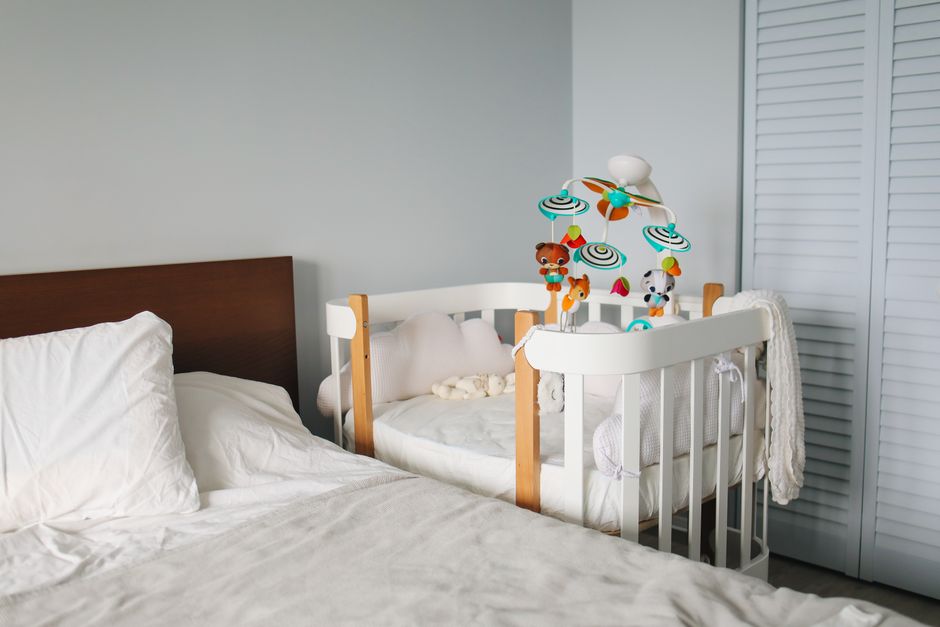
For the sleep space, 2 to 3 fitted sheets per sleep surface and 3 to 4 sleep sacks covers most families. The CDC recommends that babies always sleep on a firm, flat mattress in a safety-approved crib covered only by a fitted sheet, with all soft bedding – loose blankets, pillows, bumper pads, and soft toys – kept entirely out of the sleep area. That guidance means loose blankets are not a practical registry item, which actually makes the sleep category simpler to shop.
Sleep sacks (wearable blankets) replace loose blankets and come in different TOG weights for different room temperatures. A lighter TOG for warmer months and a heavier one for cooler seasons covers most climates. Having 3 to 4 means you can run one through the wash without scrambling for a dry replacement at the start of a nap. Fitted sheets need frequent changing because of nighttime leaks and spit-up – 2 to 3 per sleep surface means you can swap one at 3 a.m. without running a full laundry load.
The CDC guidance on room sharing recommends keeping the baby’s sleep surface in the same room as caregivers for at least the first 6 months. That shapes how many sleep surfaces you set up before birth. One safe sleep surface is the minimum. A crib plus a bedside bassinet adds flexibility but is not required. Bumper pads, sleep positioners, and wedges belong off the registry entirely – they do not meet current CDC safe sleep standards.
Feeding and Bath Essentials: Minimal but Enough
Feeding gear quantities depend on how you plan to feed, and many families do not know their final approach until after birth. If you plan to bottle-feed, 4 to 6 bottles is a solid starting point. You do not need a dozen bottles in multiple styles before you know which nipple flow and shape works for your baby – buy a couple of options, see what your baby takes, then buy more of that. Burp cloths disappear fast regardless of feeding method: 6 to 8 is a realistic minimum because spit-up happens after nearly every feed and each cloth may last only one use before it needs washing.
If you plan to breastfeed, the core pre-birth gear is minimal: 2 to 3 nursing bras, nursing pads, and a nipple cream. A breast pump is worth getting before birth if your insurance covers one – most US insurance plans are required to cover breast pumps. Keep 4 to 6 bottles on hand even if you plan to exclusively breastfeed, since feeding plans change quickly in the early days and you may want to introduce a bottle sooner than expected.
For bath time, 2 to 3 hooded towels and 6 to 8 washcloths covers the volume of newborn baths. Newborns need only gentle sponge baths until the umbilical cord stump falls off – typically 1 to 3 weeks – then short tub baths 2 to 3 times per week. A small infant tub and one mild, fragrance-free wash is all you need for the first months. The elaborate bath kits and accessory sets can wait.
What to Skip, Buy Secondhand, or Wait On
The fastest way to trim your registry is knowing what gets daily use versus what looks useful in a showroom and then sits untouched. Special occasion outfits are the most common clothing overpurchase: 1 to 2 is plenty since your baby will wear them once or twice before outgrowing them. Newborn shoes serve almost no function in the first weeks. Elaborate hats and headbands fall into the same category – they look sweet in photos and that is about it.
Gadgets worth waiting on include wipe warmers, bottle sterilizers with complicated settings, and swing or bouncer hybrids. Some babies love a swing; others ignore it entirely. Buying after the baby arrives means you know what actually soothes them before you spend the money. Most of these items are available secondhand in excellent condition because families use them for 3 to 6 months and then sell them. Swings, bouncers, activity mats, and nursing pillows are all good secondhand buys once you know what your baby responds to.
Clothing is one of the best secondhand categories because babies wear pieces so briefly. Onesies and sleepers from a resale shop are often nearly new. Items worth buying new: the crib mattress, the car seat, and anything that goes in or near the mouth. A new crib mattress is a small cost relative to the alternatives and it matters for the sleep environment. Everything else on the list is fair game to borrow or buy used.
Tip: Before buying a bassinet or bouncer for the nursery, ask family and friends first. Items used for 3 to 4 months are often in excellent condition and people are glad to lend them rather than store them.
Key Takeaways
- Start with 7 to 10 onesies and 5 to 7 sleepers in 0-3 month size – this covers laundry every 2 to 3 days with room for blowouts.
- Keep newborn-size clothing to 4 to 6 onesies and 3 to 5 sleepers – many babies outgrow newborn size within 2 to 4 weeks.
- The CDC recommends a firm sleep surface with only a fitted sheet – plan on 2 to 3 fitted sheets per sleep surface and 3 to 4 sleep sacks instead of loose blankets.
- Buy one small pack of newborn diapers before birth and stock 2 to 3 packs of Size 1 as your main supply.
- Burp cloths (6 to 8) and washcloths (6 to 8) are the most underestimated items on most newborn registries.
- Hold off on swings, bouncers, and specialty gadgets until after birth – easy to buy or borrow once you know what your baby actually needs.
Building a registry around real newborn quantities comes down to daily-use items first and specialty gear after. Multiply typical outfit changes per day by your laundry schedule to land on clothing numbers, keep the sleep space to fitted sheets and sleep sacks per CDC guidance, and hold off on gadgets until you know your baby. Most families find they run short on burp cloths and long on newborn-size clothing – the two most consistent surprises. Start with the baseline numbers in this guide, take stock after the first two weeks, and buy more of whatever you actually ran low on. Your registry does not need to cover every scenario. It needs to cover the first month, and then you can fill in the rest.
Frequently Asked Questions
- How many newborn onesies and sleepers should I buy if I do laundry twice a week?
- If you do laundry twice a week, plan on 7 to 10 onesies and 5 to 7 sleepers per size. That quantity covers 2 to 3 outfit changes per day over 3 to 4 days with a small buffer for blowouts and unexpected leaks. Buy more 0-3 month pieces than newborn pieces, since newborn size may only fit for 2 to 4 weeks.
- How many diapers will my newborn use per day and per week?
- Most newborns typically go through 8 to 12 diapers per day in the first weeks, which adds up to roughly 60 to 80 per week. Buy only one small pack of newborn size before birth because your baby may outgrow the size before you finish it. Stock 2 to 3 packs of Size 1 as your main pre-birth supply and buy more once you find your preferred brand.
- Do I need more newborn size clothes or 0-3 month size clothes?
- You need more 0-3 month pieces than newborn pieces. Many babies outgrow newborn size within 2 to 4 weeks, particularly those born at 8 pounds or more. Keep newborn quantities to 4 to 6 onesies and 3 to 5 sleepers, and put the rest of your clothing budget into 0-3 month size, where your baby will spend most of the early weeks.
- How many blankets, sleep sacks, and crib sheets are actually useful for a newborn?
- Plan on 2 to 3 fitted crib sheets per sleep surface and 3 to 4 sleep sacks. The CDC recommends keeping all loose blankets out of a baby’s sleep area, so sleep sacks replace traditional blankets entirely. Extra fitted sheets mean you can swap one out during a nighttime leak without running a load of laundry in the middle of the night.
- What newborn items can I safely skip or wait to buy until after baby arrives?
- Skip wipe warmers, bumper pads, newborn shoes, and special occasion outfits beyond 1 to 2 pieces before birth. Hold off on swings, bouncers, and white noise machines until you see what soothes your baby. These items are widely available secondhand and easy to buy in the first weeks once you know how your baby responds to them.
This article is for informational purposes only and does not replace professional medical advice. Always consult your pediatrician about your child’s health.