The Short Answer
- Crib bumpers, sleep positioners, and inclined sleepers are unsafe by current guidelines – leave them off entirely.
- Decorative crib bedding sets include pieces (quilts, bumpers, pillows) that safe sleep guidelines prohibit in the crib.
- Wipe warmers, bottle warmers, diaper pails, and standalone changing tables top the regret list for most first-time parents.
- Hold off on bottles, pacifiers, and breast pumps – baby’s preferences and insurance benefits make these smarter to sort out after birth.
- Clothes, toys, and books come in as gifts whether or not you list them, so keep those categories thin.
The items to skip on your baby registry fall into three categories: unsafe products (crib bumpers, sleep positioners, inclined sleepers), unnecessary gadgets that duplicate tools you already own, and wait-and-see picks that are smarter to buy after your baby arrives. Each section below names the product, explains why, and tells you what to use instead.
Unsafe Baby Registry Items to Skip, No Exceptions
Crib bumpers, sleep positioners, inclined sleepers, teething jewelry, and drop-side cribs are unsafe by current AAP and CPSC standards and belong off your registry with no exceptions. These aren’t judgment calls, and no budget trade-off changes the answer.
Crib bumpers are a suffocation risk. The AAP safe sleep guidance says babies should sleep alone, on their backs, on a firm, flat surface with nothing else in the crib. Several US states have banned the sale of padded crib bumpers outright. Skip any decorative crib set that bundles in a bumper, quilt, or full-size pillow.
Sleep positioners and wedges don’t belong in the sleep space. These products claim to hold babies at a specific angle during sleep, but CDC safe sleep guidance calls for a firm, flat, clear surface with no propping devices. No soft support belongs there.
The CPSC has issued safety warnings about inclined sleepers following reported infant deaths. The CPSC crib safety center details the standards current infant sleep products must meet. Don’t register for any product designed to hold a baby at a steep incline for sleep.
Teething jewelry, including amber necklaces and silicone bead bracelets worn by infants, carries choking and strangulation risk at every age in the first year. Drop-side cribs were banned by the CPSC in 2011. If you see one offered secondhand, skip it regardless of price.
Unnecessary Baby Gear Most Parents Regret Registering For
Wipe warmers, bottle warmers, bottle sterilizers, diaper pails, standalone changing tables, and baby food makers are things many new parents wish they had skipped. Each duplicates something already in your home.
A wipe warmer warms one wipe at a time, but wipes dry out inside the unit and most babies adjust to room-temperature wipes within a few days. A bottle warmer does the same job as a bowl of warm water, just with a cord and a chunk of counter space added. A bottle sterilizer duplicates what a dishwasher’s sanitize cycle already does for most healthy, full-term babies. If your baby has specific health needs, your pediatrician can advise on sterilization. A diaper pail is marketed as an odor-control solution, but a regular trash can with a tightly fitted lid does the same job without requiring proprietary refill bags or a second bin to manage.
A standalone changing table is a large piece of furniture with one job. A changing pad secured to the top of a dresser costs less, takes the same floor space, and leaves you with usable drawer storage once your child is out of diapers. Most parents who register for a standalone table switch to the dresser version within the first two months.
A baby food maker purees food for one purpose, then spends most of its life in a cabinet. A regular blender does the same job and handles everything else in your kitchen too. The decorative crib set lands in the same regret pile. Mayo Clinic crib safety guidance notes that pillows, thick blankets, and soft objects in the crib are suffocation hazards, so the quilt and pillow in a matching set will sit in a closet. Register for two fitted crib sheets and nothing more.
| Item to Skip | Why | What Works Instead |
|---|---|---|
| Diaper pail | Requires proprietary refill bags; a lidded trash can handles odor equally well | Trash can with a fitted lid |
| Wipe warmer | Dries out wipes, uses counter space | Room-temperature wipes |
| Bottle warmer | Bowl of warm water does the job | Warm water in a bowl |
| Standalone changing table | Single-use furniture, large footprint | Changing pad on a dresser |
| Bottle sterilizer | Dishwasher sanitize cycle handles it | Dishwasher sanitize setting |
| Baby food maker | Single-purpose, retired by 10 months | Regular blender |
| Decorative crib set | Bumper, quilt, pillow are unsafe in crib | Two fitted crib sheets only |
Tip: Before adding any convenience gadget to your registry, ask whether you already own something that does the same job. A large share of baby-specific devices duplicate tools already sitting in your kitchen or bathroom.
What to Buy After Baby Arrives, Not Before
Bottles, pacifiers, high chairs, and baby carriers are worth owning, but not worth registering for before your baby arrives. Each depends on your baby’s preferences or your household’s setup, which makes them smarter choices after birth.
Bottles are the clearest example. Babies have strong preferences about nipple shape and flow rate, and what works for one infant is refused by another. Register for a small starter set of two or three bottles in one style, then wait to buy more until you learn what your baby accepts. Buying a full set of twelve before birth is one of the most common registry mistakes.
Pacifiers follow the same logic. Some babies take to them right away, others refuse every style. Add a small variety pack at most, and hold off on bulk buying. Breast pumps are a different case: most US insurance plans cover one at no cost under the Affordable Care Act, so check with your insurer before adding one to your registry. A gift buyer may pay out of pocket for something you could receive free through your health plan.
A high chair isn’t needed until around 6 months, when babies start solid foods. Registering for one before birth means storing a large item for months before it sees any use. Add it closer to the time you actually need it. Baby carriers and wraps are also better chosen after birth. Fit depends heavily on body type and baby size, and a carrier that works perfectly for a friend may not work for you.
Tip: Most registry platforms let you mark items as a future need or add a note. Use that feature for wait-and-see buys so guests do not purchase them before you are ready to choose.
Baby Clothes and Toys: Let Your Guests Handle These Categories
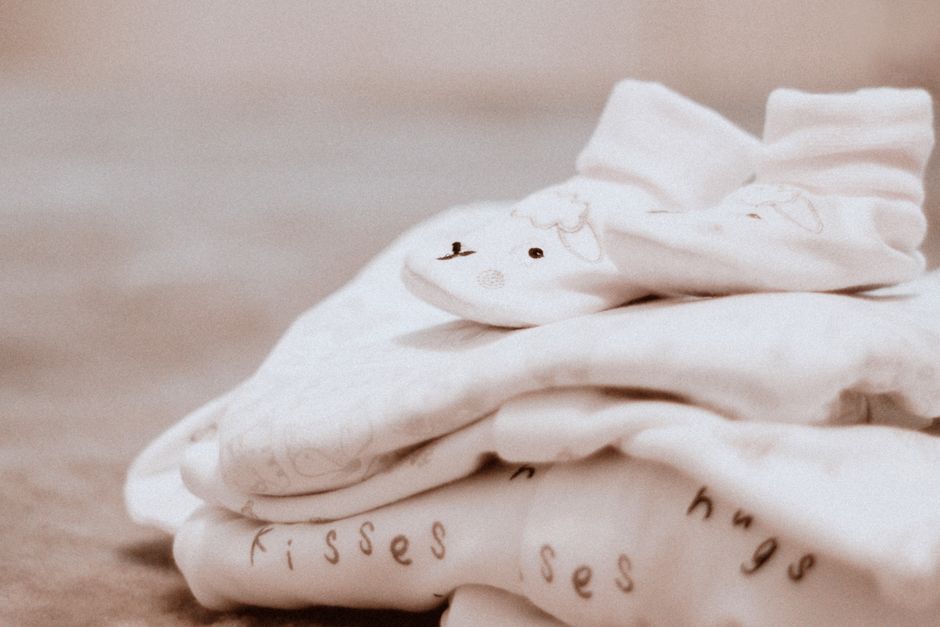
Baby clothes and toys arrive as gifts whether or not they appear on your registry. Keeping these categories thin frees up guest purchases for the essentials you actually need.
Baby clothes are among the most over-gifted items at any shower. The problem is sizing: guests go for newborn because that’s what fills the front of every store display, but plenty of babies skip newborn sizing entirely if they’re born on the bigger side, and others blow past it in a few weeks. If you do add clothing, steer guests toward 3-month or 6-month sizes and specify what season your baby will be in that size.
Baby shoes before walking age serve no developmental purpose and fall off constantly. Skip them for the entire first year. Stuffed animals are beloved gifts, but the AAP safe sleep guidelines are clear that soft objects belong out of the crib. A basket of plush toys in the room is fine for supervised playtime, but don’t register for items that can’t safely go in the sleep space.
Books and simple sensory toys make great gifts and a short wish list of specific favorites is perfectly fine. Resist filling this category. Toys, books, and plush come in as birthday, holiday, and visit gifts at nearly every occasion through the first year. You’ll have more than enough.
Small Apartment or Tight Budget: Where to Skip Even More
In a small apartment or on a tight budget, the skip list grows longer. Space and money spent on unused gear carry a double cost: the purchase price and the floor space.
Multiple bouncers, swings, and rockers are one of the most common ways registries balloon. Different sources recommend each one, so many parents register for all three. Start with one or two and learn what your baby prefers before buying more. Each one takes real floor space, and all three together can fill a room that was meant to serve other purposes.
A dedicated nursery glider is comfortable, but any padded chair you already own handles night feeds just as well. If your nursery or bedroom is short on space, skip the dedicated rocker and use what’s already there. Large matching nursery furniture sets look good in a showroom and become real storage problems at home. Buying pieces individually lets you adapt your layout as routines change in the first year.
Baby-specific versions of everyday items are almost always optional. Baby laundry detergent, specialty baby hangers, and dedicated baby washcloths can almost always be replaced by unscented or dye-free versions of what you already use. If your baby has skin concerns, ask your pediatrician for product guidance rather than assuming anything labeled “baby” is automatically the right choice.
Key Takeaways
- Crib bumpers, sleep positioners, and inclined sleepers are off-limits by current AAP and CPSC standards, not a matter of preference.
- A changing pad on top of a dresser replaces a standalone changing table at lower cost with no loss of function.
- Register for two or three bottles in one style before birth, then buy more after you know what your baby accepts.
- US insurance covers most breast pumps at no cost under the Affordable Care Act – check before registering for one.
- Clothes, toys, and books arrive as gifts at nearly every occasion in the first year – keep these categories minimal or off the list entirely.
- For small spaces, start with one bouncer or swing and skip the triple setup until you know what your baby likes.
The best registry is a short one. Every item on this skip list falls into one of three groups: unsafe by current standards, unnecessary because something you already own does the same job, or better chosen after you meet your baby. Skip the clutter now and your home has room for what actually gets used from week one. If a well-meaning relative sends you a wipe warmer anyway, you can return it. You can’t return the time spent managing gear that never earned a place in your routine. Build your list around what you need on the first night home, and add the rest only as you learn what works for your family.
Frequently Asked Questions
What are the top 10 things I should NOT put on my baby registry?
The top items to skip are crib bumpers, sleep positioners, inclined sleepers, wipe warmers, standalone changing tables, bottle sterilizers, decorative crib sets, pre-walker baby shoes, baby food makers, and full swing-plus-bouncer-plus-rocker setups. The first three are unsafe by AAP and CPSC standards; the rest duplicate something you already have or aren’t worth buying before birth.
Are crib bumpers and decorative crib bedding sets safe to add to a registry?
No. Crib bumpers are a suffocation risk and are banned for sale in a growing number of US states. The AAP recommends a bare crib with only a fitted sheet. The quilt, pillow, and bumper included in a decorative crib set can’t be safely used in a baby’s sleep space.
Should I register for a diaper pail, wipe warmer, and bottle sterilizer, or are they a waste of money?
Most parents find all three unnecessary. A bowl of warm water warms bottles. A dishwasher’s sanitize cycle handles sterilization for most healthy, full-term babies. A regular trash can with a fitted lid manages diaper odor just as well. Skip all three and use what you already have.
Is it better to wait on bottles, pacifiers, and breast pumps instead of putting them on the registry?
Yes. Babies have strong preferences for bottle and pacifier styles, so testing after birth saves money. Most US insurance plans cover one breast pump at no cost under the Affordable Care Act. Registering for a pump risks paying out of pocket for something you may receive free through your insurer.
How do I avoid getting random toys and outfits instead of the essentials on my registry?
Set a completion discount on your registry so guests see your prioritized list first. Add a short note asking for specific clothing sizes and seasons. Most registry platforms let you mark items as highest priority, which puts your most-needed products at the top when guests browse.
This article is for informational purposes only and does not replace professional medical advice. Always consult your pediatrician about your child’s health.